Because refractory materials are frequently subjected to erosion from high-temperature and even high-speed dust-laden airflows during use, research on their wear resistance has been increasing in recent years. Furthermore, with the continuous improvement of high-temperature wear-resistant equipment, research on the high-temperature wear resistance of refractory materials has also been initiated.
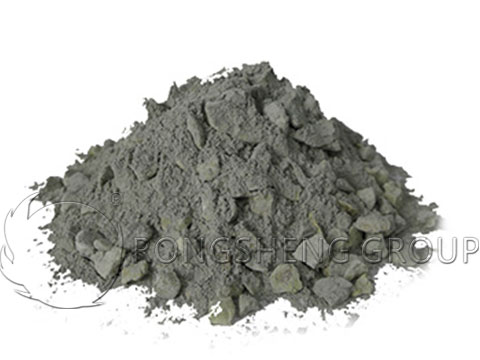
Factors Affecting the High-Temperature Wear Resistance of High-Alumina Castables
Some studies have investigated the high-temperature wear resistance of corundum refractories, suggesting that reducing cement content and increasing silica fume content can improve the material’s high-temperature wear resistance, while increasing abrasive particle size and erosion angle can increase wear.
Other studies have investigated the effect of silicon carbide content on the high-temperature wear resistance of low-cement alumina castables. These studies found that the wear rate tends to increase with increasing silicon carbide content. Furthermore, at test temperatures below 600°C, the wear rate of castables with different silicon carbide contents varies considerably. Above 1000°C, the wear rate of the castables is basically uniform, and the wear rate of all materials decreases with increasing test temperature. Therefore, this paper uses a newly developed high-temperature wear resistance testing machine, with high-alumina castables as raw material, to study the effects of critical particle size, cement content, and heat treatment temperature on the high-temperature wear resistance of the material. The main raw materials used in high-alumina castables include premium-grade alumina clinker, SiO2 micro powder, eALO micro powder, p-Al2O3 micro powder, and pure calcium aluminate cement.
High-temperature abrasion resistance testing was conducted using a newly developed high-temperature abrasion testing machine. The sample was heated to the test temperature in the high-temperature chamber of the machine and held for 30 minutes. A specific amount of silicon carbide abrasive of a specific particle size was sprayed onto the sample surface using compressed air. The high-temperature abrasion resistance of the material at a certain temperature was evaluated based on the volume loss of the sample before and after wear. Test temperatures were selected at room temperature, 600, 800, 1000, and 1200°C. The abrasive spraying amount was 1000g, the spraying time was 900s, and the sample size was 100mm x 100mm x (25-30)mm.
Effect of Cement Addition on High-Temperature Abrasion Resistance of Castables
The relationship between cement addition and wear volume of high-alumina castables at different test temperatures. At room temperature and 1000°C, the wear volume of high-alumina castables gradually decreased with increasing cement content. However, at 120°C, the wear volume slightly increased with increasing cement content. This is because at room temperature, i.e., after baking, the flexural and compressive strength of the sample increases with increasing cement content, thus reducing the wear volume. At 1000°C, the CaO introduced by the cement may react with Al2O3 and SiO2 in the material to form a certain amount of low-melting-point phases such as anorthite, promoting sintering and densification of the sample, thus increasing strength. Therefore, the wear volume of the castable decreases with increasing cement content. However, when the temperature rises to 1200°C, the high-alumina castable enters a viscous flow stage due to the decrease in the viscosity of the glass phase of the high-alumina material. Moreover, the higher the cement content, the more glass phase is generated, the lower the viscosity, and the greater the impact wear. Therefore, the wear amount of high-alumina castables increases slightly with increasing cement content.
To further compare the high-temperature wear resistance of low-cement-bonded and cement-free high-alumina castables, P-Al2O3 micropowder was used as a binder instead of 71 cement (6% addition) in high-temperature wear resistance tests. The relationship between different bonding systems and the high-temperature wear resistance of high-alumina castables was investigated. The wear resistance of the materials varied little at different test temperatures. However, at high temperature (1200°C), the cement-free castable showed slightly better wear resistance. This may be because the high-alumina castable bound with p-Al2O3 micropowder produces relatively less glass phase at 1200°C.
Sample CA-6 from the formulation was selected as the research object. After heat treatment at 600 °C, 1000 °C, and 1200°C, its wear resistance at different temperatures was compared. The relationship between the wear amount of high-alumina castables and the test temperature was investigated. The wear amount of samples after heat treatment at different temperatures showed similar trends with the test temperature. The higher the test temperature, the greater the wear amount of the wear body of the sample compared to the samples treated at 600 and 1000°C. This phenomenon may be due to the fact that after heat treatment, the mineral phases of the high-alumina castable include corundum, mullite, and a small amount of glassy phase. Because of their different coefficients of thermal expansion, microcracks will appear to varying degrees inside the material after cooling.
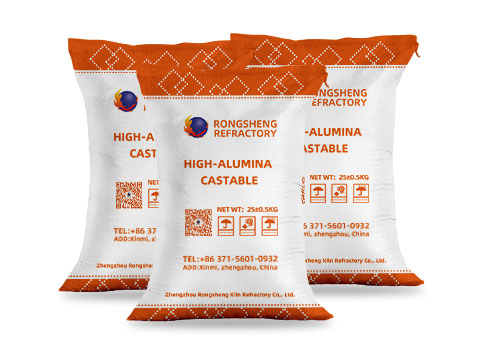
How many types of high-alumina castables are there?
Aluminum content of high-alumina castables. High-alumina castables have aluminum contents ranging from 55% to 80%. Therefore, there are actually many different types of high-alumina castables. There are also many requirements for adding other components to high-alumina castables, and they are also classified as light or heavy. Saying there are dozens, or even hundreds, of high-alumina castables is not an exaggeration.
The most commonly used high-alumina castables have an aluminum content of 55%, 60%, and 65%. For special furnace linings with high temperatures and extremely strong corrosiveness, high-strength wear-resistant castables are required. For acid-corroded linings, acid-resistant castables are selected. For air ducts, andalusite high-alumina castables are used. Therefore, it is difficult to accurately list all the types of high-alumina castables.
High-alumina castables have a wide range of applications
In other words, aside from magnesia and carbonaceous castables, almost all other castables require the addition of bauxite. Castables containing bauxite can generally be called high-alumina castables. The differences lie in their grade and the regions they are used in. Therefore, high-alumina castables have a wide range of applications and varieties, which is a reality in practice.
Actually, corundum castables are also high-alumina castables, belonging to the high-grade material category, and also fall under the category of high-alumina castables.
Corundum-Silicon Carbide Castables
Corundum-silicon carbide castables are also bauxite materials with a high alumina content added to the matrix. It can be said that neutral refractory lining materials basically cannot do without bauxite; they can also be called high-alumina castables, only the amount of bauxite added varies, resulting in different grades of castables.
High-Alumina Castables
In high-alumina castables, if the aluminum content is higher than 85%, it is called a corundum castable. If silicon carbide is added, it is called corundum-silicon carbide castable. If mullite is added, it is called corundum-mullite castable. All high-alumina series basically contain mullite.
Therefore, there are many types of high-alumina castables, and it is impossible to define them by an exact number of types. The appropriate grade of high-alumina castable must be determined based on the actual operating temperature or corrosion resistance.
RS is a manufacturer of high-alumina castables, featuring an environmentally friendly, advanced, fully automated monolithic refractory material production line. RS High Alumina Refractory Factory specializes in providing integral refractory lining materials for high-temperature industrial furnaces, including various high-alumina castables, plastics, ramming mixes, and spray coatings. For customized high-temperature furnace lining solutions, please contact RS factory for free samples and solutions.