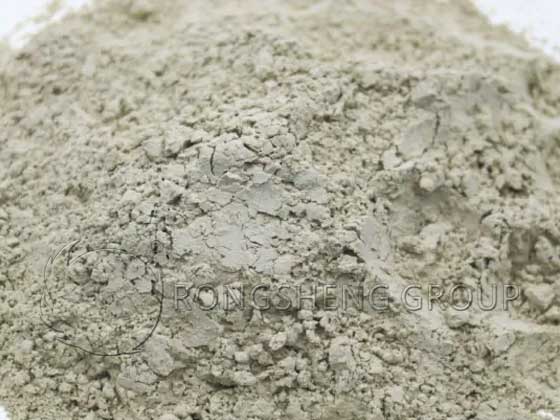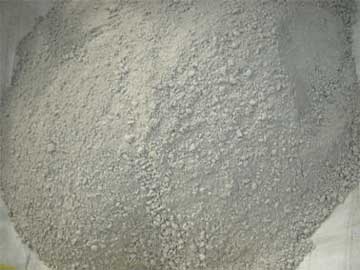
High-alumina cement is added to refractory castables to provide a bonding effect. Rongsheng High-Alumina Refractory Manufacturer can provide high-quality high-temperature furnace lining materials tailored to the operating conditions of high-temperature industrial furnaces. For purchasing refractory castables, refractory cement, and high-alumina refractory cement (Malaysia), please contact us for free samples and quotations.
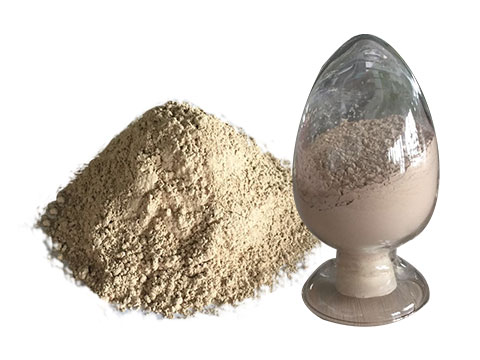
High-Alumina Refractory Cement Manufacturer
High-alumina cement varies in aluminum and calcium content, and is classified into CA-50, CA-70, and CA-80. CA-50 high-alumina cement is a yellow cement, made from bauxite and limestone. CA-70 high-alumina cement has fewer impurities, and its setting properties and refractoriness are better than CA-50 refractory cement; it is used as a binder in the preparation of low-cement refractory castables. CA-80 high-alumina cement has an aluminum content of 80% and contains α-Al₂O₃ micropowder; it is used as a binder in high-grade refractory castables. Because of the high aluminum content, CA-70 and CA-80 cements can improve the setting speed and address weaknesses in intermediate-temperature strength of refractory castables. Furthermore, their low calcium content extends the service life and later-stage strength of the refractory castable.
The higher the alumina content, the higher the refractoriness; the lower the alumina content, the higher the calcium oxide content. Adding high-alumina cement as a binder allows the refractory castable to be demolded within 24 hours. High-alumina cement affects the fluidity of the refractory castable, construction time, and demolding time. If used improperly, it can have a significant impact on the construction of the refractory castable.
Adding High-Alumina Cement to Refractory Castables
The use of high-alumina refractory cement involves three stages: dissolution, nucleation, and precipitation. For example, CA-50 high-alumina cement is generally used in medium- and low-grade refractory castables. CA-50 cement has its weakest strength at 800℃. Therefore, if the furnace lining is used at 800℃, which is also the most problematic temperature—not high enough to use ordinary refractory castables—low-cement castables must be used. Low-cement castables have low calcium content, good strength at medium temperatures, and good strength in later service life.
CA-70 and CA-80 high-alumina cements have high aluminum content and are added in small proportions, so they are used in low-cement refractory castables. This enhances the strength of the refractory castable while reducing its calcium content, and also improves its strength at medium temperatures.
Therefore, when adding high-alumina cement to refractory castables, it is important to consider not only the bonding properties but also the service temperature. The final decision was made to add either CA-50 high-alumina cement or CA-70 and CA-80 high-alumina cement.
Aluminate Cement/High-Alumina Refractory Cement
Aluminate cement, also known as high-alumina cement or refractory cement, is primarily a binder used to bond refractory materials together, achieving a certain bonding strength and hardness. It is widely used in undetermined refractory materials, such as high-alumina castables, low-cement castables, steel fiber abrasion-resistant castables, and corundum abrasion-resistant castables, and has a wide range of applications.
Definition of High-Alumina Refractory Cement
High-alumina refractory cement, also known as aluminate cement, mainly includes ordinary aluminate cement and pure aluminate cement. Its refractory temperature and applications vary depending on the Al₂O₃ content. Aluminate cement is a cementitious material with calcium monoaluminate (CAO·Al₂O₃) and calcium dialuminate (CAO·2Al₂O₃) as its main phases. It is made by mixing natural bauxite or industrial alumina with calcium carbonate (limestone) in a certain proportion, followed by calcination or electrofusion. Due to its high refractory temperature and stability, it is widely used as a binder in monolithic refractories, designated CA. Note: Adding an appropriate amount of α-Al₂O₃ powder during the production of CA70 and CA80 cement can improve its high-temperature resistance.
Aluminate cement is classified into four grades based on its Al₂O₃ content (mass fraction): CA50, CA60, CA70, and CA80. The specific grades are as follows:
- (1) CA-50: 50% ≤ (Al₂O₃) < 60%. This grade is further divided into CA50-I, CA50-II, CA50-III, and CA50-IV based on strength.
- (2) CA60: 60% ≤ (Al₂O₃) < 68%. This grade is divided into CA60-I (mainly calcium monoaluminate) and CA60-II (mainly dicalcium aluminate) based on its main mineral composition.
- (3) CA70: 68% ≤ (Al₂O₃) < 77%
- (4) CA80: (Al₂O₃) ≥ 77%
Performance of High-Alumina Refractory Cement
The setting and hardening of aluminate cement are related to the curing temperature. The CA2 phase sets and hardens faster with increasing curing temperature. The CA phase, however, sets and hardens faster at 20℃, slower at 30℃, and then faster again above 30℃.
Aluminate cement hydration is exothermic. When using aluminate cement containing a fast-setting phase as a binder, appropriate cooling measures should be taken. Especially in summer, it is important to prevent excessive heat concentration from affecting the internal and surface quality of the aluminate cement-bonded castable. Conversely, cement with CA2 as the main phase sets slowly. In winter construction, steam curing is used to promote hydration and accelerate setting and hardening. This is generally achieved by adding appropriate amounts of accelerators and retarders to adjust the setting and hardening speed of the aluminate cement.
In high-temperature industries, the following three points must be met when using high-alumina refractory cement:
- (1) A suitable setting time, ensuring sufficient working time: initial setting time greater than 0.5 hours and final setting time less than 8 hours.
- (2) Sufficient early strength; the strength after one day of curing can reach 60%-70% of the grade, and after 3 days it can reach over 90%.
- (3) Possesses a certain refractory temperature and high-temperature usability.
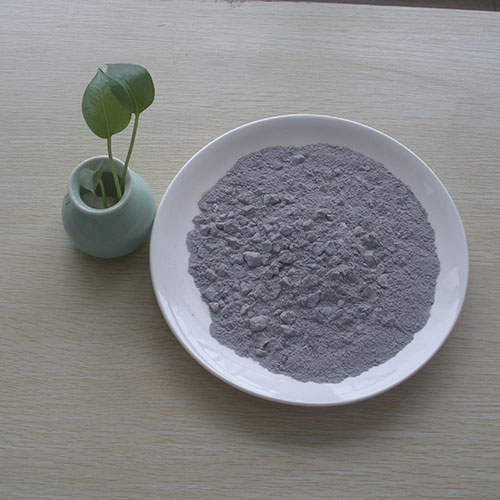
Applications of Aluminate Cement
Aluminate cement is mainly used as a binder for refractory castables and shotcretes. Medium and low-grade refractory castables use ordinary calcium aluminate cement, such as clay castables and high-alumina castables. High-grade refractory castables use pure calcium aluminate cement as a binder, such as corundum-reinforced castables, mullite castables, and corundum-spinel castables. The amount of calcium aluminate cement added to ordinary refractory castables is 10%-20%, while the amount added to low-cement castables is 5%-7%, and the amount added to ultra-low-cement castables is less than 3%.
- (1) Clay castables have a service temperature of 1300-1450℃. They are generally used as linings for steel rolling furnaces, various heat treatment furnaces, boilers, vertical kilns, and rotary kiln preheating zones.
- (2) High-alumina castables have a service temperature of 1400-1550℃. They can be used for linings of various heat treatment furnaces and burners. Electric arc furnace tapping trough, high-temperature section of lime vertical kiln, rotary kiln head, and power plant boiler lining.
- (3) Corundum castables have an operating temperature of 1500-1650℃. They are mainly used for linings of various high-temperature furnaces and components, impregnation pipes of molten steel vacuum degassing devices, linings of injection metallurgy and argon blowing integral spray guns, electric arc furnace top triangular area linings, LF furnace covers, and high-temperature wear-resistant linings of petrochemical industry catalytic cracking reactors.
- (4) Low-cement and ultra-low-cement castables are widely used in industrial kilns in metallurgy, petrochemicals, machinery manufacturing, power, and building materials industries to replace refractory bricks as linings.
Precautions during construction of castables bonded with aluminate cement:
- (1) After the castable is formed (before and after demolding), its surface should be covered with a thin plastic sheet to prevent excessive evaporation of moisture and the presence of unhydrated cement residue, which could lead to a powdery layer or peeling on the surface.
- (2) Na+ ions (mainly from the dispersant) and Ca+ (mainly from the calcium aluminate cement) in the castable will migrate to the surface of the castable with the moisture and react with CO2 gas in the air to form carbonates, causing “white frost” or peeling on the surface of the castable and damaging the overall surface structure.