The core of selecting incinerator refractory material is to find the most economical material solution throughout the entire life cycle (the sum of initial investment and operating energy consumption) while ensuring the safety of the furnace structure and meeting process requirements.
Functions and Material Selection Principles of Each Layer of Furnace Lining
Furnace linings are typically divided into a refractory layer and an insulation layer (sometimes including a thermal insulation layer) from the inside out. The core functions, commonly used materials, and considerations for each layer are summarized below:
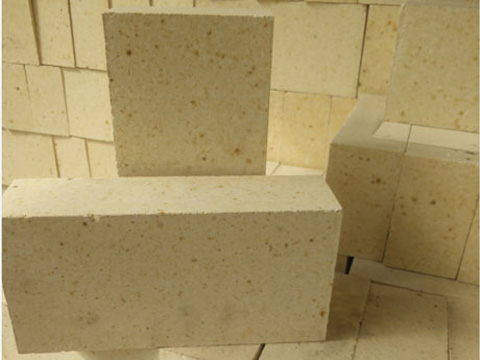
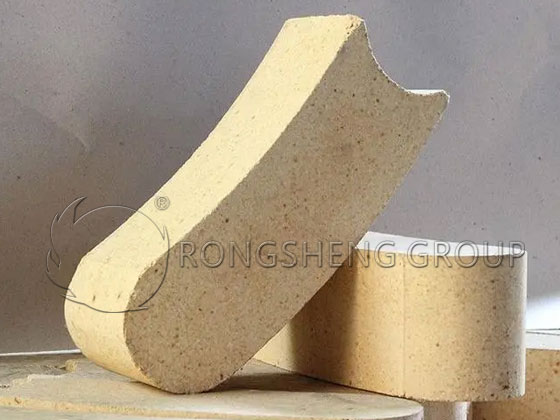
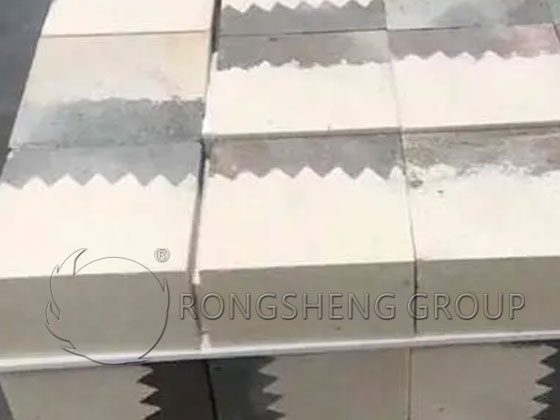
- Refractory Layer (Working Layer): Directly withstands the chemical erosion and physical scouring of high-temperature flames, flue gas, and molten slag. Commonly used materials include incinerator bricks, refractory bricks (such as clay bricks and high-alumina bricks), and refractory castables. Temperature and corrosion resistance are primary considerations. Thickness must ensure structural strength and service life; thicker is not necessarily better. The surface temperature of the high-temperature side can be assumed to be 0.8-0.9 times the furnace gas temperature.
- Insulation Layer (Heat Insulation Layer): Significantly reduces heat flux density, minimizes heat loss, and lowers the temperature of the outer structure. Materials include lightweight refractory bricks, ceramic fiber blankets/felts, and aluminosilicate fibers. Pay attention to the operating temperature limit and thermal conductivity. Its inner surface temperature must be lower than the material’s safe operating temperature, and the outer surface temperature must meet design requirements (e.g., <60℃ or environmental requirements).
- An optional thermal insulation layer further reduces the external wall temperature outside the insulation layer to achieve energy-saving or safety standards. Materials with lower thermal conductivity, such as rock wool or glass wool, are used. This layer is typically installed when there are strict limitations on the external wall temperature of the equipment or for deep energy saving. Its thickness calculation also follows the principles of thermal insulation calculation.
Core Calculation Methods: Steady-State Thermal Conductivity and Economic Thickness
For cylindrical incinerators, the lining thickness calculation is based on the “steady-state thermal conductivity of the cylindrical wall” model, aiming for an economical thickness—the thickness where the sum of initial investment depreciation and annual heat loss costs is minimized.
-
Single-Layer Cylindrical Wall Heat Conduction Formula
This is the foundation of the calculation. The heat flow Q (W/m) of each layer of material is equal:
Q = (2πλ * (t₁ – t₂)) / ln(d₂/d₁)
λ: Thermal conductivity of the material, W/(m·K)
t₁, t₂: Inner and outer surface temperatures of the layer, °C
d₁, d₂: Inner and outer diameters of the layer, m
-
Calculation of Double-Layer (or Multi-Layer) Composite Linings
When using a refractory layer + insulation layer, calculations must be performed layer by layer from the inside out. The key is to determine the interlayer interface temperature.
-
- Step 1: Set the interface temperature. Based on the maximum safe operating temperature of the insulation material, set the temperature tₘ of the outer surface of the refractory layer (i.e., the interface between the two layers). For example, if the safe temperature limit of the insulation layer is 850℃, then tₘ can be set to 800-840℃.
- Step 2: Calculate the refractory layer thickness. Given the furnace internal temperature t_inner and the interface temperature tₘ, use the single-layer formula to deduce the outer diameter dₘ of the refractory layer, thus obtaining its thickness.
- Step 3: Calculate the insulation layer thickness. Given the interface temperature tₘ and the design-required outer wall temperature t_outer, use the single-layer formula to deduce the outer diameter of the insulation layer, thus obtaining its thickness.
- Step 4: Verification and optimization. Calculate the total heat loss Q and assess whether it meets the process and energy consumption requirements. Adjust the thickness or material and conduct an economic comparison.
Calculation Example
-
Design Conditions and Material Selection Basis
Core Design Parameters
-
- Process Parameters: Effective inner diameter of furnace D = 3m, Tg = 1100℃; Ambient temperature Ta = 25℃
- Design Target: Outer surface temperature of furnace shell Ts = 80℃
- Structural Form: Three-layer lining, from the inside out: refractory layer, insulation layer, and thermal insulation layer.
-
Material Selection and Key Performance Parameters
The TO incinerator furnace has a relatively uniform temperature, but high requirements for thermal insulation and energy saving. Material selection is based on temperature range and functional requirements:
-
- Refractory layer: Low-cement-content, high-alumina refractory castable. Withstands high temperatures, resists weakly acidic flue gas erosion, and provides structural strength. Thermal conductivity λr = 1.05 W/(m·K). Safe operating temperature ≤1300°C.
- Insulation layer: Ceramic fiber modules. Significantly reduces heat flux density, lowering the interface temperature to the safe range of the insulation material. Thermal conductivity λi = 0.12 W/(m·K). Safe operating temperature ≤1000°C.
- Insulation layer: Rock wool board. Further reduces heat loss, ensuring the outer wall temperature meets standards. Thermal conductivity λb = 0.042 W/(m·K). Safe operating temperature ≤600°C.
Interface temperature settings (calculation starting point):
-
- Refractory layer/insulation layer interface temperature T1 = 800 ℃ (below the insulation layer safety limit, with margin).
- Insulation layer/thermal insulation layer interface temperature T2 = 150℃ (below the thermal insulation layer safety limit).
-
Detailed Calculation Process
The calculation is based on the steady-state heat conduction formula of the cylindrical wall, using the heat flux density Q (heat loss per unit tube length, W/m) to connect the three layers in series.
- Calculation Model and Formula
-
- (1) Heat conduction of a single-layer cylindrical wall: Q = (2πλL (Tin -Tout)) / ln(Dout/Din)
- (2) Convective heat dissipation from the outer wall of the furnace shell: Q = πDsα(Ts -Ta) where α is the surface heat transfer coefficient, taken as 15W/(㎡.k)
- (3) Under steady state, Q is equal for each layer.
- Iterative Solution Steps and Results
Due to the coupling of the equations, numerical iteration is required. The core is to find the outer diameter of each layer that satisfies Ts = 80℃.
-
- Step 1: Assumptions and Initialization. Assume the total heat flux Q, calculate the outer diameter and Ts of each layer from the inside out, compare with the target and correct Q until convergence.
- Step Two: Detailed Iterative Calculation (Results after Convergence) [with Figure]
- Step Three: Final Convergence Result (This result is only an example calculation; the selection of coefficients deviates slightly from reality, resulting in a higher value) [with Figure]
Final Verification: After rounding, the recalculated outer wall temperature is approximately 79.5℃, meeting the design requirement of ≤80℃.
Heat Loss per Unit Length: Q≈18600W/m
Calculation Results Analysis and Engineering Considerations
-
Thickness Distribution
(These results are for illustrative purposes only; the coefficients chosen may deviate from actual values, resulting in overestimation.)
-
- Thickest Insulation Layer (370mm): This layer bears the main temperature drop (800℃→150℃). Sufficient thickness of low thermal conductivity material is necessary to establish high thermal resistance, which is the core of energy saving.
- Fire-resistant Layer (220mm): Required to withstand temperatures up to 1100℃ and for structural support. High-alumina material has high strength, and this thickness ensures a long service life.
- Thermal Insulation Layer (160mm): This is the key layer ensuring accurate temperature control of the outer wall. The low thermal conductivity of rock wool allows it to achieve this with a relatively small thickness.
-
Key Engineering Aspects
- Anchoring System: Heat-resistant steel (e.g., 310S) anchors must be used, fixed in layers. “Y” type anchors are used for the fire-resistant layer, and “L” type anchors are used for the thermal insulation/insulation layer. Anchor spacing should not exceed 300mm.
- Expansion Treatment: Expansion joints are independently installed for each layer.
- Refractory castable: Divided into 1.5m x 1.5m blocks, with 2mm wide expansion joints, and filled with ceramic fiber blankets.
- Ceramic fiber modules: Pre-compressed during installation, with natural alignment between modules.
- Rock wool boards: Staggered joints, tightly spliced.
- Construction sequence: Construction must proceed from the outside in: First install the insulation layer on the furnace shell, then install the heat insulation layer, and finally erect the formwork and pour the refractory layer. This is crucial for ensuring the stability of the lining structure.
Summary and Suggested Solutions Based on the Calculation Examples Above
For a circular TO incinerator with an inner diameter of 3.0m and a furnace temperature of 1100℃, to achieve the target outer wall temperature of 80℃ while considering service life and economy, the following furnace lining scheme is recommended:
Materials and Thickness:
(This result is only an example calculation; the selection of coefficients may deviate from actual values, resulting in an overestimation.)
- Refractory Working Layer: 220mm low-cement, high-alumina refractory castable.
- Intermediate Insulation Layer: 370mm standard ceramic fiber modules.
- Outer Insulation Layer: 160mm high-density rock wool board.
- Estimated Outer Diameter of Furnace: Approximately 4.48 meters.
Design Basis:
This calculation follows the basic principles of GB/T 50264-2013 “Code for Design of Thermal Insulation Engineering for Industrial Equipment and Piping,” and the results are theoretical calculation values.
Suggested Next Steps:
- Commission a professional design institute to conduct construction drawing design, including detailed drawings of the anchoring system and expansion joint layout.
- Material Confirmation: Request the supplier’s report on the measured thermal conductivity of the selected materials at average temperature, and use it in calculations for final verification.
- Thermal Simulation: If possible, use software such as ANSYS to perform unsteady-state thermal field simulations to verify thermal stress under extreme conditions (such as start-up and shutdown).
In actual engineering, the areas around furnace openings (inspection doors, observation holes, burner interfaces) require localized reinforcement (e.g., using precast refractory components). Heat loss in these areas typically accounts for a significant proportion of the total loss and must be considered.