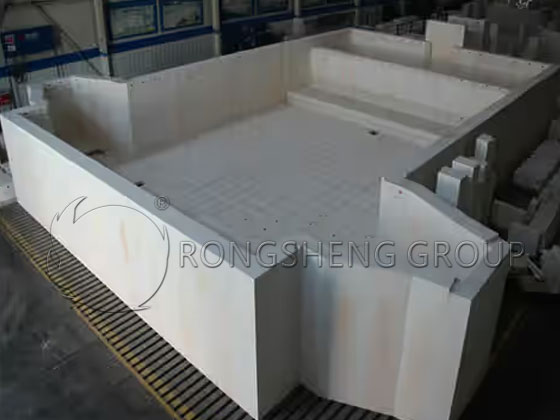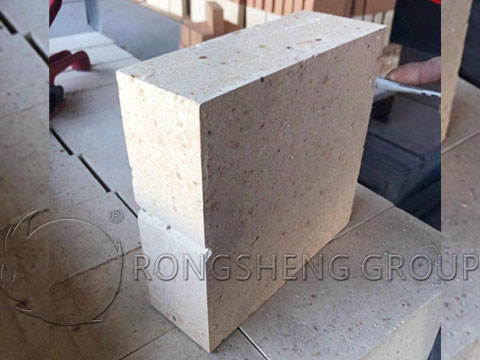
Whether the anchor bricks are used on the furnace top or furnace wall, if they are partially broken or partially pulled apart without falling off, it is mostly because the anchor bricks have cracks. If the anchor bricks are replaced, the front wall or furnace top needs to be removed, and the furnace must be dried according to requirements after replacement. Moreover, there is no guarantee that the bricks will not fall off again.
Emergency Measures for Partially Broken Anchor Bricks
In emergency situations, there are ways to temporarily repair them. Anchor bricks are heavy and grooved. High-temperature adhesive can be applied to the broken surface of the anchor brick, then pressed firmly to return the surface to its original position, preventing the broken portion of the anchor brick from falling further. Heating the high-temperature adhesive after applying it to the broken surface and pressing it back to its original position will improve its effectiveness. However, high-temperature adhesive generates very strong adhesive force, so experienced workers are required to perform this operation.
Before bonding a broken anchor brick with high-temperature adhesive, the broken surface must be cleaned of coal ash, carbon ash, and other debris with a wire brush or paintbrush. Then, apply the adhesive. Finally, brush on a diluted 35-40% phosphoric acid solution to keep the brick surface clean and achieve a strong bond.
Apply high-temperature adhesive to the broken surface of the anchor brick, or the contact area between two bricks, press the anchor brick back into its original position, and secure it with temporary supports. To prevent cracked bricks from falling off during the repair process, a 5mm layer of high-temperature mortar is applied to the entire anchor brick from the fire-facing side to the upper layer, making the anchor brick a solid whole.
After the high-temperature mortar is applied to the fractured surface of the anchor brick, it must be baked at approximately 150℃ for about 12 hours. For very small areas, 6 hours of baking is sufficient. For localized repairs, a blowtorch or gas welding method can be used for baking. Once baking is complete, the system can be put into operation. Repairing bonded anchor bricks allows for timely emergency repairs before special circumstances such as furnace collapse or detachment occur. When the damage is minor, localized repairs can be used, providing quick and effective repairs while minimizing further losses.
In fact, during the construction of anchor bricks, to prevent cracking and brick detachment, high-temperature mortar or phosphate mortar can be used as the bonding material. This not only provides fast bonding and high bond strength but also offers stable high-temperature performance, low shrinkage, and maintains the integrity of the entire structure.
Anchor Bricks: A Key Material for Furnace Lining Stability
In the application of refractory materials for industrial furnaces and kilns, anchor bricks (also known as hanging bricks) play a crucial role. RS Refractory Materials Manufacturer introduces important information such as the function, selection points, and usage principles of anchor bricks, to help practitioners better understand and utilize this material.
Basic Functions of Anchor Bricks
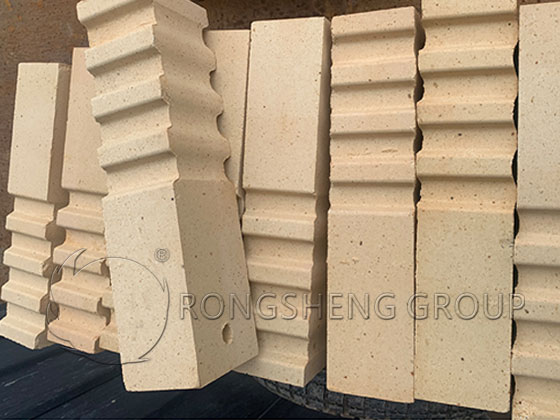
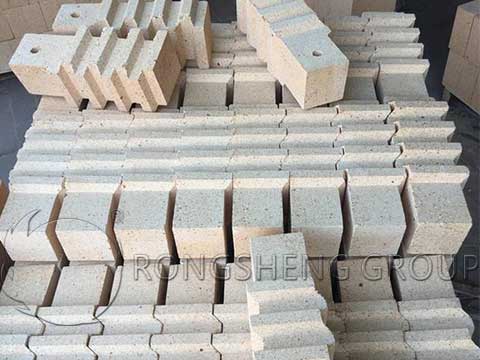
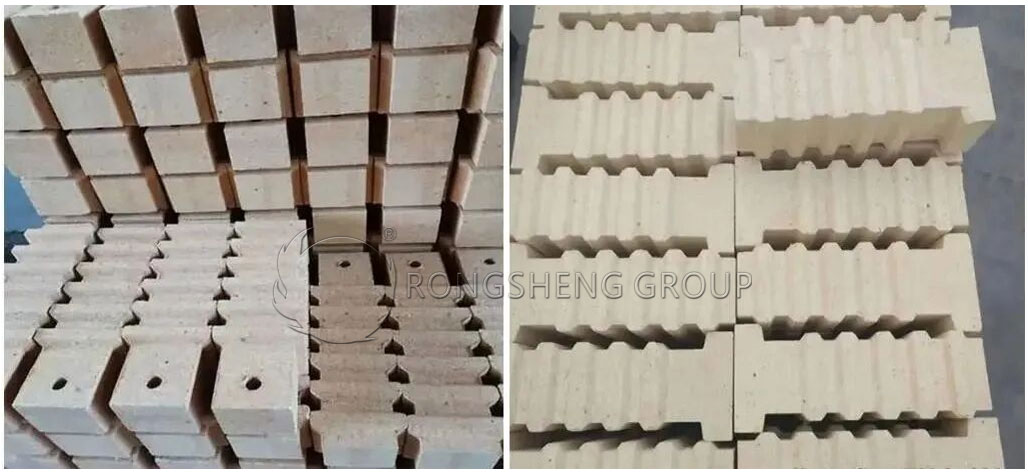
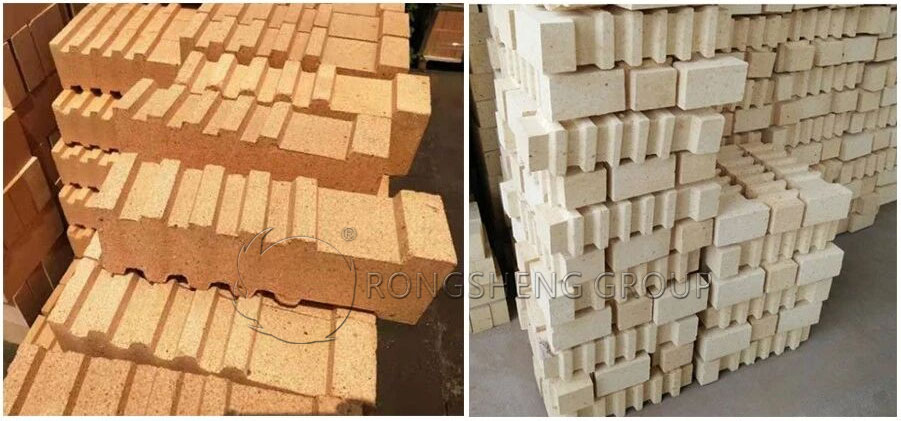
Anchor bricks are mainly used to reinforce the lining of furnaces and kilns, especially before pouring castable refractory materials, providing a stable framework support for the lining. They are divided into two types: wall bricks and top anchor bricks. Top hanging bricks are installed by hanging and have holes for easy hanging; wall bricks are not perforated. Their core function is to ensure the structural stability of the furnace lining under high-temperature environments, preventing deformation or damage to the lining due to thermal expansion and contraction.
Selection Points for Anchor Bricks
- Alumina Content: The alumina content of hanging bricks has a significant impact on their performance. Generally speaking, anchor bricks with an alumina content of 55% have better flexibility and are suitable for most applications. Although some users require bricks with an alumina content of 75% and a softening temperature under load of 1550℃, in practical use, a higher alumina content is not necessarily better. Flexibility is a more critical performance indicator for suspended bricks; therefore, bricks with a 55% alumina content, due to their superior flexibility, are often kept as inventory by manufacturers to meet urgent needs.
- Material Matching: The material of the suspended bricks should be consistent with the material of the castable refractory used. This ensures consistency between the bricks and the castable during thermal expansion and contraction, resulting in a tight and effective bond and extending the service life of the furnace lining.
Principles for Using Anchor Bricks
- Arrangement Requirements: The number of anchor bricks should be determined based on the internal temperature variations of the furnace and the size of the furnace lining area. Generally, no fewer than 6 anchor bricks per square meter should be used to ensure the overall stability of the furnace lining.
- Inspection and Selection: Before laying, the hanging holes of the anchor bricks must be carefully inspected for cracks. If there are excessively long cracks at the hanging holes, the brick cannot be used; if there are cracks all around the holes, the brick should be discarded to avoid structural problems in the furnace lining due to brick damage.
- Laying Operation: When laying bricks close to the anchor bricks or hanging bricks, pre-laying should be performed to accurately determine the position of the anchor bricks. Then, the welded parts of the metal shell should be carefully cleaned with a wire brush, and welding rods suitable for the welded parts should be selected to firmly weld the hanging bricks to ensure stable installation.
- Post-Construction Treatment: After the laying is completed, anchor hooks should be inserted, and the gaps should be filled and tightened with refractory fiber felt. This step provides excellent protection for the anchors, further enhancing the stability and durability of the furnace lining.
Recommendations for the Production and Use of Anchor Bricks
Since the quantity of hanging bricks (anchor bricks) used is relatively small, and the mold making is quite difficult, it is recommended to allow sufficient production time before use. This can avoid affecting the construction and maintenance progress of the furnace due to production cycle issues, ensuring the smooth progress of the project.
In conclusion, anchor bricks are an indispensable and important material for furnace linings. Their correct selection, reasonable use, and standardized construction operations are crucial for ensuring the efficient operation and extending the service life of the furnace. Contact Rongsheng for free samples and quotations.