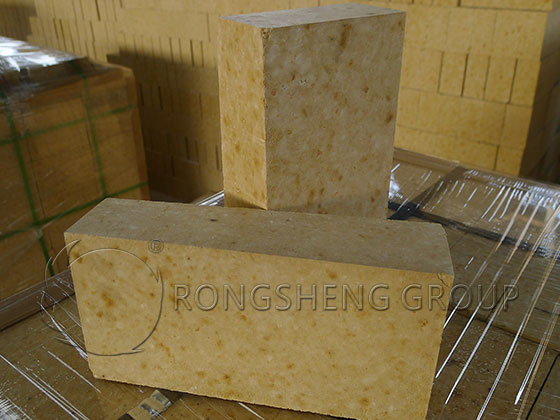
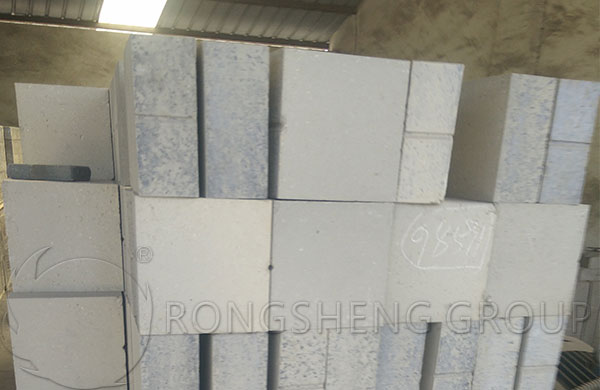
Application of alumina bricks in glass kilns. Minor damage, such as cracks, that occurs during the preparation of aluminium bricks poses a potential safety risk. To improve the material’s performance, refractory brick manufacturers investigated the effects of factors such as mold size, heat treatment temperature, heating rate, cooling rate, and porosity on crack formation in alumina refractories during the firing process. The results show that:
- As the mold size increases, the maximum thermal stress value also increases, leading to a greater risk of cracking.
- The peak value of the maximum thermal stress occurs in the temperature range of 1200–1600℃.
- When only the heating rate within the temperature range of 1000–1350℃ is changed, a higher heating rate corresponds to a higher maximum thermal stress value.
- When the kiln cools from 1600℃ to room temperature, the maximum thermal stress value increases rapidly in the initial cooling phase, and a higher cooling rate corresponds to a higher maximum thermal stress value.
- For aluminium bricks blanks with 5%, 7%, and 10% porosity, under the same firing conditions, the maximum thermal stress values of the 10% porosity brick blank were the lowest at 1200℃, 1300℃, 1400℃, and 1500℃. Therefore, brick blanks with 10% porosity are more beneficial than those with 5% and 7% porosity in reducing the risk of cracking during firing.
Precautions for Using Aluminium Bricks in Glass Kilns
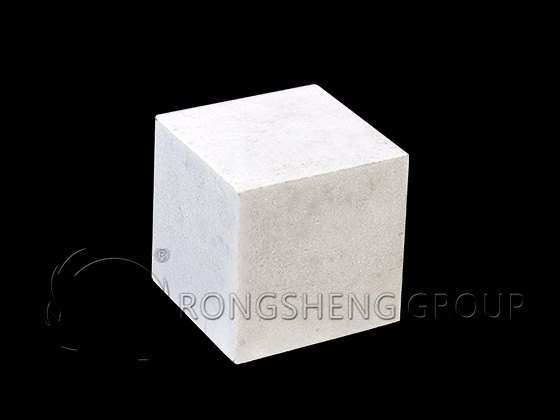
Alumina refractory bricks are commonly used in various kilns, whether brick kilns or glass kilns. As a high-grade refractory brick material, there are many precautions to take when using them. So, what should be noted when using them in glass kilns?
- Because aluminium bricks cannot bear weight or pressure at high temperatures, they can only be used in the lower part of the kiln wall or in areas with lower temperatures at the bottom.
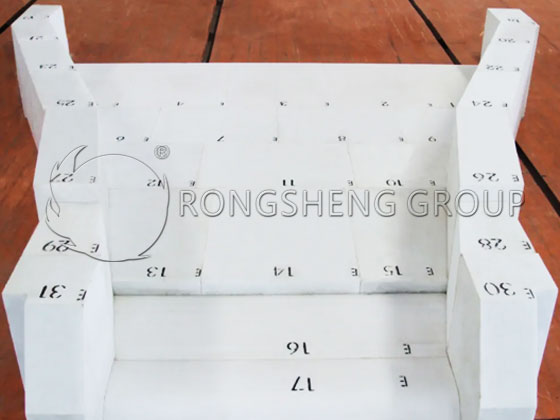
- For important and complex-shaped linings, pre-laying is necessary, using alumina refractory brick-specific mortar for bonding.
- A small expansion joint should be left between alumina refractory bricks, with the gap controlled between 1.5mm and 2mm.
- During use, it is important to clean the dust and slag from the inner wall of the kiln shell to prevent loosening.
- The inside of the kiln shell must be flat, without unevenness or tilting.
- The joints must be secure. When processing bricks, a brick cutter must be used for fine processing; manual processing is prohibited. Joints and bends in flat surfaces must be at least half the size of the original brick. Original bricks must be used for jointing, and the processed surface of the brick must not face the inside of the furnace.
- Alumina refractory bricks must be stored in a dry warehouse.
Rongsheng Alumina Refractory Brick Manufacturer
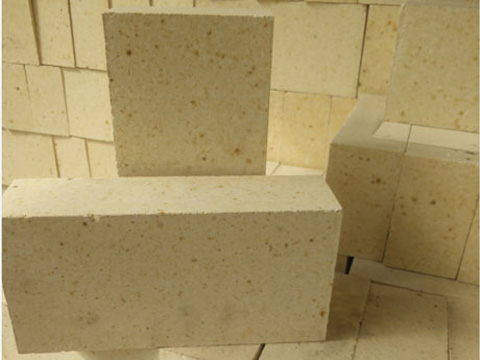
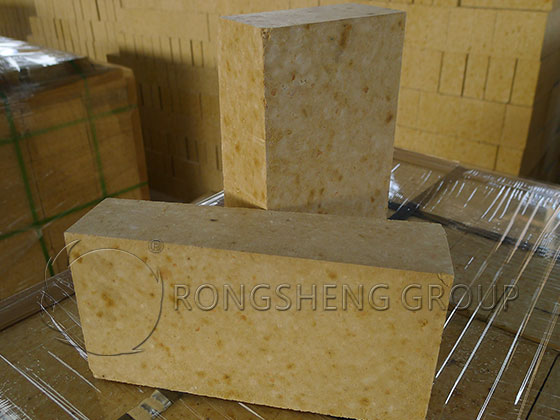
Alumina refractory bricks (aluminium bricks) are a type of heavy refractory brick material. Rongsheng high-alumina refractory brick manufacturer produces SK32-SK38 refractory bricks. Rongsheng Refractory Materials products mainly serve the steel, non-ferrous metal smelting, chemical, building materials, glass, carbon, hot-rolling, and coking industries. Operating temperature range: 1250°C – 1520°C.
Production Process of Alumina Insulating Refractory Bricks
These insulating refractory bricks are made primarily from fused alumina, sintered alumina, and industrial alumina. They feature strong resistance to acid and alkali atmospheres, high reducing power, and good thermal shock resistance. They can be used continuously below 1700°C. The production process of alumina insulating refractory bricks generally includes two methods: the burnout additive method and the foaming method.
Burnout Additive Method
The burnout additive method uses polystyrene microspheres as burnout additives to manufacture alumina insulating refractory bricks. The production process is as follows:
Raw Materials and Additives
Fused corundum, sintered alumina, and industrial alumina are the main raw materials, with polystyrene microspheres as the burnout additive. Silica or other materials act as volume stabilizers, providing binding at both room and high temperatures. Additives serve as binders.
Batching, Mixing, and Molding
Batching is based on the bulk density and physicochemical properties of the refractory brick products, determining the amount of each material to be added. Mixing is done using a mixer or slurry mixer. The order of addition is: polystyrene microspheres, a portion of binder, water, powder, and binder. Molding uses vibration molding or other methods where product dimensions are easily controlled and elastic aftereffects are minimal, or slurry casting.
Drying and Firing
During drying, the polystyrene microspheres experience a dramatic volume increase at 90-110℃, subsequently liquefying, vaporizing, and oxidizing. Most manufacturers expand polystyrene spheres before use in production, so the drying temperature should not be too high or too rapid. The residual moisture content of the dried brick blanks should be less than 2%. Side-loading is used for kiln loading, and attention should be paid to the volume change of loss on ignition during the low-temperature firing stage. The maximum firing temperature is determined based on the bulk density and physicochemical properties of the refractory bricks, generally exceeding 1600℃, which can be higher than the firing temperature of dense bricks.
Foam Method
The foam method uses rosin soap foaming agent mixed with finely pulverized raw materials and binders to form a foam slurry, which is then poured into molds. After drying, firing, shaping, and sorting, refractory brick products are produced. Products produced using the foam method have uniform structure, low thermal conductivity, and good thermal insulation properties.