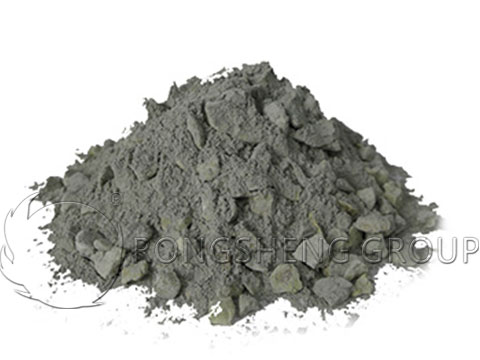
Aluminate cement, a type of specialty cement, is also known as refractory cement. It serves as an indispensable hydraulic cementing material within the refractory industry. It constitutes a critical raw material in the national economy—particularly in the formulation of refractory materials for high-temperature kilns and furnaces across sectors such as metallurgy, chemicals, electric power, and building materials. Furthermore, aluminate cement is currently utilized in the pollution control sector; by adding an appropriate amount of acid (sulfuric or hydrochloric acid), it can be converted into a calcium aluminate water purifier for wastewater treatment, thereby making a significant contribution to national environmental protection efforts.
Due to constraints imposed by various factors, the production processes for aluminate cement currently employed worldwide fall primarily into two categories. The first is the overseas fusion method, exemplified by France’s Kerneos Inc. The second is the domestic sintering method utilizing a hollow rotary kiln, exemplified by China’s Great Wall Aluminum Company. Both of these processes are characterized by low production yields and high energy consumption. Given the immense advantages and inevitable trajectory demonstrated by “new dry-process” cement technologies—specifically those featuring pre-calcination—in the production of ordinary Portland cement, the application of this new dry-process pre-calcination technology to the production of aluminate cement clinker is likewise destined to become the prevailing trend.
Based on the commissioning work for an 800-ton-per-day aluminate cement clinker production line utilizing a pre-calcination kiln, RS High Alumina Cement Supplier, the specific process characteristics involved in the production of aluminate cement clinker have been summarized and analyzed.
Production Line System Process Overview
- Raw materials consist of two components: high-quality limestone and bauxite. Under strict laboratory supervision, these materials are precisely proportioned using a computerized weighing system and scales, then conveyed via belt conveyor to the raw meal mill for grinding. The ground raw meal is stored in a dual-silo system that ensures uniform mixing and homogenization. Upon discharge from storage, the raw meal passes through an external metering hopper and is accurately weighed by a rotor scale before entering the kiln.
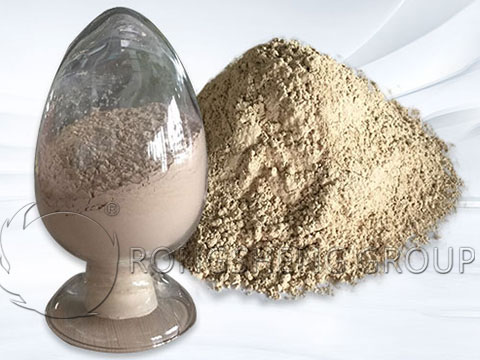
- The discharged raw meal is transported by an elevator to the heat exchange duct at the C2 outlet of the preheater, entering at the C1 stage. After undergoing heat exchange and gradual heating through various stages, it enters the decomposition furnace for calcination; subsequently, it is separated at the C5 stage before entering the rotary kiln. Following calcination within the 3.2 m × 42 m rotary kiln, the clinker is discharged and cooled in a fourth-generation push-bar grate cooler, then conveyed via an inclined drag chain conveyor to the clinker storage silo. The resulting aluminate cement clinker typically exhibits a yellow or brown coloration.
- The aluminate clinker is discharged from storage, blended with an appropriate amount of gypsum and other additives, and then fed into a cement mill for grinding into the final product, which is subsequently transferred to the finished cement silo for storage.
Physicochemical Properties of Aluminate Cement
- Chemical Composition of Aluminate Cement Clinker. The chemical composition of aluminate cement clinker primarily consists of five oxides: aluminum oxide (Al₂O₃), calcium oxide (CaO), silicon dioxide (SiO₂), iron(III) oxide (Fe₂O₃), and titanium dioxide (TiO₂). The sum of these five oxides accounts for over 96% of the clinker’s total composition. Specifically, Al₂O₃ + CaO constitutes 85%–95%; SiO₂ constitutes 1.5%–8.0%; Fe₂O₃ constitutes 0.5%–12%; and other oxides account for less than 4.0%.
- Mineral Composition of Aluminate Cement Clinker. Within aluminate cement clinker, the various oxides do not exist in isolation; rather, two or more oxides react to form an aggregate of various minerals. Consequently, aluminate cement clinker is a multi-mineral, finely crystalline artificial rock or synthetic material. Its primary mineral constituents are calcium aluminates, which exist in three forms: CaO·Al₂O₃, CaO·2Al₂O₃, and 12CaO·7Al₂O₃. These can be abbreviated as CA, CA₂, and C₁₂A₇, respectively. Among these, monocalcium aluminate (CA) serves as the principal hydraulic mineral phase in aluminate cement, while dicalcium aluminate (CA₂) is the dominant mineral phase in high-alumina aluminate cements.
Issues and Characteristics Associated with Calcining High-Alumina Cement Clinker in Pre-calciner Kilns
-
How should the temperatures of the preheater and calciner be controlled?
During the initial commissioning phase, the temperature control for the preheater and calciner was largely a process of trial and error. Since there were no prior precedents—either domestically or internationally—for the pre-calciner calcination of aluminate materials, and thus no mature operational experience to draw upon, the commissioning operators possessed only a superficial understanding of the physicochemical properties of aluminate cement. Consequently, failing to recognize the vast differences in raw material composition and material properties between aluminate cement and silicate cement, they attempted to control the process using parameters typically applied to ordinary silicate cement production. As a result, the preheater system frequently experienced issues such as excessive temperatures at the C1 outlet, material collapse within the preheater system, and difficulty in stabilizing the temperature at the calciner outlet. Furthermore, severe crusting occurred in critical areas—including the C5 inlet, discharge chute, smoke chamber interior, and constriction zones—while process anomalies such as the formation of secondary kiln lining and rings at the kiln inlet (tail end)—and, in severe cases, material leakage from the kiln inlet—occurred with alarming frequency. During this period, although various remedial measures were implemented—such as optimizing the material feed point from C4 into the calciner, adjusting the size and angle of the material scattering plate, repositioning the pulverized coal nozzle at the kiln inlet (including the addition of swirl vanes), and modifying the cross-sectional area of the tertiary air inlet—none of these interventions yielded any effective improvements.
In response to these persistent issues, relevant industry experts were consulted, and extensive technical literature was reviewed. Based on the subsequent analysis, the definitive conclusion reached was that the temperatures within the preheater—and specifically the calciner—must be maintained at a comparatively lower level than standard practice. The rationale for this conclusion is as follows:
- 1) The raw material mix for aluminate cement clinker differs significantly from that of ordinary silicate cement. Specifically, the Al₂O₃ content in aluminate cement raw meal is approximately 10.95 times higher than that found in silicate cement raw meal. Conversely, the CaO content is approximately 0.66 times that of silicate cement raw meal, while the SiO₂ content is approximately 0.55 times that of silicate cement raw meal. The primary mineral phases present in aluminate cement raw meal are CaCO₃ and Al₂O₃·H₂O, whereas the primary mineral phases in silicate cement raw meal consist mainly of CaCO₃ and SiO₂. Given these distinct differences in raw material composition, the volume of waste gas generated at the kiln inlet (tail end) inevitably differs between the two processes; consequently, the dimensions and design of the kiln inlet preheater must be appropriately adjusted to accommodate these variations in waste gas volume. Furthermore, the raw meal particles for aluminate cement are, on average, finer and more uniform than those for silicate cement. To ensure they undergo adequate preheating within the preheater and exhaust ducts, it is necessary to correspondingly adopt a lower air velocity control strategy within the exhaust ducts.
- 2) Compared to silicate cement raw meal, aluminate cement raw meal features a lower limestone content and superior quality; moreover, the decomposition temperature of boehmite (aluminum monohydrate) is 200–300°C lower than that of limestone. Consequently, the target decomposition temperature should be controlled at a level approximately 50°C lower than usual, and the heat energy required for the decomposition of aluminate cement raw meal is significantly less than that required for silicate cement raw meal.
Based on the above analysis, during subsequent operations, we boldly experimented with reducing coal consumption in the decomposition furnace. We maintained the internal temperature of the decomposition furnace at approximately 860°C, the furnace outlet temperature at around 830°C, and the material discharge temperature at the C5 cyclone at approximately 820°C. Under these conditions—verified through multiple sampling tests—the decomposition rate of the raw meal entering the kiln consistently fell within the 90%–95% range, thereby fully satisfying the requirements of the pre-decomposition process. After maintaining this operational mode for a period of time, the aforementioned abnormal phenomena previously observed at the kiln inlet gradually disappeared, thereby conclusively validating the accuracy of our analysis and corrective measures.
-
What should be done when aluminate raw meal exhibits a narrow burning range and is prone to issues such as clinker melt-down or the escape of unburnt material?
During the initial commissioning phase, after the raw material entered the kiln following decomposition, it was observed during the calcination process that the sintering range for aluminate cement raw meal was extremely narrow. If the temperature in the burning zone rose even slightly, clinker meltdown would occur within a very short time; the material would subsequently agglomerate into large balls, and in severe cases, fuse together into a columnar mass. Conversely, if coal feed was drastically reduced to lower the burning temperature, it became extremely difficult to maintain adequate thermal control, and unqualified—i.e., unburnt—raw material would easily surge through the kiln, making the process exceptionally hard to manage.
To address this situation, we consulted literature on special cements and analyzed experimental data. The data indicated that the approximate sintering range for aluminate cement clinker lies between 1360°C and 1410°C. For aluminate cement raw meal, the liquid phase begins to appear at approximately 1350°C–1400°C, and a substantial amount of liquid phase forms within the 1400°C–1450°C range. Therefore, when compared to silicate cement:
- 1) During the calcination process, the temperature at which the liquid phase begins to appear in aluminate cement raw meal is higher than that for silicate cement raw meal.
- 2) The sintering range of aluminate cement raw meal is approximately 100°C narrower than that of silicate cement raw meal.
Based on the above analysis, subsequent operational management focused on adjusting the kiln’s thermal regime accordingly. Operationally, we emphasized to the kiln operators the need for constant visual monitoring of the flame and material flow, encouraged them to cultivate their ability to anticipate material behavior, and urged them to work with boldness, decisiveness, and proactivity. After a period of trial and error, we gradually succeeded in overcoming this challenge.
-
How can the persistent and vexing problem of ring formation and balling in the burning zone be resolved?
In the production of calcined aluminate cement clinker, the most troublesome challenge is controlling the kiln coating within the burning zone. If one attempts to manage the kiln coating using the operational methods typically applied to silicate cement clinker calcination, the coating often thickens rapidly—layer by layer—eventually forming a solid ring. Subsequently, large, egg-shaped agglomerates (“eggs”) continuously form behind this ring structure. This entire process can unfold within the span of just one or two shifts; during this time, regardless of the remedial measures employed, it is almost impossible to halt the worsening of the problem. Typically, the operational cycle—from the commencement of raw material feeding to the forced cessation of feeding and kiln shutdown for ring removal—lasts only three days; the longest recorded run has been just seven days.
Despite this being a long-standing and critical issue, no truly feasible or effective solution has yet been identified. Currently, the measures available are limited to frequently adjusting the position of the coal pipe, making significant adjustments to the kiln rotation speed, maintaining appropriate burning temperatures and liquid phase volumes, and striving to keep the clinker granulation size within a specific, uniform range. Additional tactics include modulating the intensity of the flame at the kiln hood—strengthening or weakening it—and adjusting the flame’s length. However, the practical efficacy of these measures is not significant; ultimately, a kiln shutdown to remove the ring remains inevitable—it is merely a matter of when it will occur.
Following several months of practical experimentation with the pre-calciner burning process for aluminate cement clinker, our understanding of the specific production characteristics of aluminate cement has deepened significantly. On the positive side, we have achieved major breakthroughs in terms of production output, electricity consumption, and coal consumption. Under normal operating conditions, our 800-ton-per-day production line can run continuously without difficulty, consistently meeting both quality standards and production targets on a daily basis. Regarding specific metrics, the standard coal consumption per ton of clinker is conservatively controlled to remain under 120 kg, while electricity consumption is maintained at or below 35 kWh per ton of clinker. Furthermore, through continued improvements in operational management, there remains substantial room for further optimization across all key performance indicators.