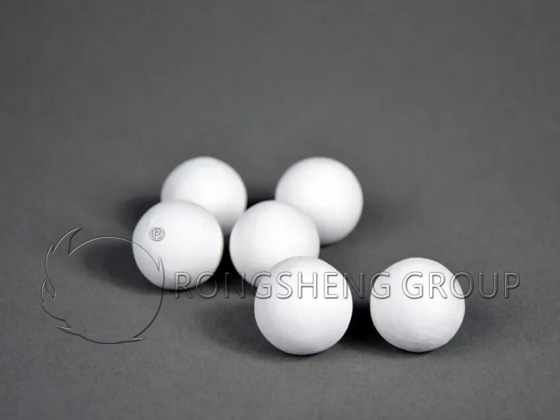
Rongsheng Alumina Refractory Brick Manufacturer: Alumina-based wear-resistant ceramics are currently categorized into two types—high-purity and standard (general-purpose).
High-purity alumina ceramics consist of material with an Al₂O₃ content exceeding 99.9%. Due to a high sintering temperature (ranging from 1650°C to 1990°C) and a light transmission wavelength of 1–6 μm, this material is often used to create vessels for molten glass, serving as a substitute for platinum crucibles. Its light-transmitting properties and resistance to alkali metal corrosion also make it suitable for use in sodium-vapor lamp tubes. In the electronics industry, it is employed for integrated circuit substrates and high-frequency insulating materials.
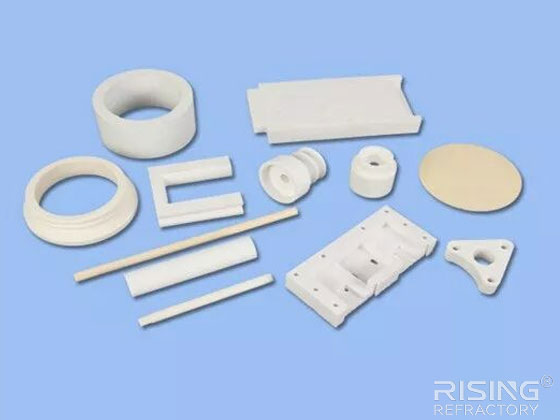
Standard (general-purpose) alumina ceramics are classified based on their Al₂O₃ content—commonly referred to as 99-alumina, 95-alumina, 90-alumina, and 85-alumina; materials with an Al₂O₃ content of 80% or 75% are also included in this category. Among these, 99-alumina is used for high-temperature crucibles, furnace tubes, and specialized wear-resistant components, such as ceramic bearings, seals, and water valve discs. 95-alumina is primarily utilized for corrosion-resistant and wear-resistant parts. 85-alumina often incorporates a portion of talc, which enhances its electrical properties and mechanical strength; it can be bonded with metals such as molybdenum, niobium, or tantalum, and is sometimes used in components for vacuum electronic devices.
Manufacturing Process of Alumina Ceramics
-
Powder Preparation
Incoming alumina powder is processed into a powder material tailored to specific product requirements and the intended forming technique. The particle size of the powder is kept below 1 μm. For the production of high-purity alumina ceramics, the alumina must have a purity of at least 99.99% and undergo ultrafine grinding to ensure a uniform particle size distribution. When manufacturing wear-resistant plates via extrusion or injection molding, binders and plasticizers—typically thermoplastic polymers or resins—are added to the powder, generally accounting for 10–30% of the total weight. These organic binders are thoroughly mixed with the alumina powder at temperatures between 150°C and 200°C to facilitate the forming process.
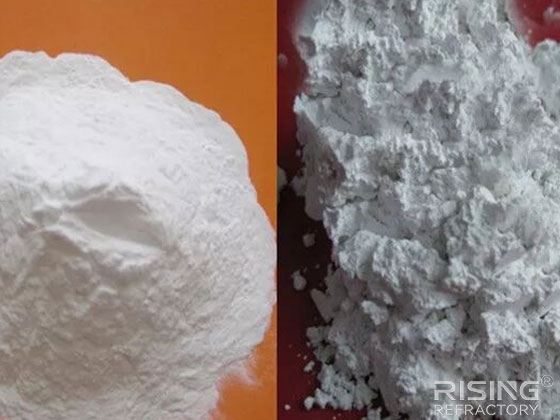
In contrast, powder raw materials intended for hot-pressing do not require the addition of binders. For semi-automatic or fully automatic dry-pressing, the powder must meet specific technical requirements; it is typically processed via spray granulation to create spherical granules, which improves flowability and ensures consistent filling of the mold cavity during the forming process. Furthermore, 1–2% of a lubricant—such as stearic acid—is added to reduce friction between the powder and the mold walls. When dry-pressing is employed, the powder is subjected to spray granulation, with polyvinyl alcohol (PVA) incorporated as a binder.
-
Forming Methods
Various forming methods are used for alumina ceramic products, including dry pressing, slip casting, extrusion, cold isostatic pressing (CIP), injection molding, tape casting, hot pressing, and hot isostatic pressing (HIP). In recent years, new techniques have been developed—both domestically and internationally—such as filter pressing, direct coagulation casting, gel casting, centrifugal casting, and solid freeform fabrication. The choice of forming method depends on the product’s shape, dimensions, geometric complexity, and precision requirements. Key methods are described below:
Slip Casting: This is the oldest forming method used for alumina ceramics. By utilizing gypsum molds, it offers low production costs and is well-suited for creating large or complex-shaped components. The critical step in slip casting is the preparation of the alumina slurry. Typically, water is used as the liquid medium, combined with deflocculants and binders; the mixture is thoroughly milled, de-aired, and then poured into a gypsum mold. As the capillary action of the gypsum mold absorbs moisture, the slurry solidifies within the mold. When casting hollow parts, the excess slurry is poured out once a layer of the desired thickness has adhered to the mold walls. To minimize shrinkage of the green body, it is essential to use a high-concentration slurry.
Dry Pressing: Dry pressing for alumina ceramics is generally limited to components with simple shapes, wall thicknesses exceeding 1 mm, and a length-to-diameter ratio of no more than 4:1. This process can be performed via uniaxial or biaxial pressing. Presses may be hydraulic or mechanical and can operate in semi-automatic or fully automatic modes. These presses can exert a maximum pressure of 200 MPa, with production rates reaching 15–50 pieces per minute. In hydraulic presses, the stroke pressure is uniform, which can lead to variations in the height of the pressed parts if the amount of powder filling is inconsistent. In contrast, with mechanical presses, the applied pressure varies based on the amount of powder loaded; this can result in uneven shrinkage during sintering, thereby affecting product quality. Therefore, the uniform distribution of powder particles during the dry-pressing process is crucial for mold filling. The accuracy of the fill volume significantly impacts the dimensional precision of the manufactured alumina ceramic components. Powder particles with a size greater than 60 μm—falling within the 60–200 mesh range—exhibit optimal free-flowing characteristics, yielding the best results for pressure molding.
In alumina ceramic slurries, organic additives must also be incorporated to form an electrical double layer on the surfaces of the particles, ensuring the slurry remains in a stable suspension without settling. Furthermore, binders—such as polyvinyl alcohol, methyl cellulose, or ammonium alginate—and dispersants—such as polyacrylamide or gum arabic—are added to render the slurry suitable for slip-casting (injection molding) operations.

-
Firing Technology
Sintering is the technical process used to densify granular ceramic green bodies, transforming them into solid materials. During sintering, voids between the particles in the green body are eliminated, and small amounts of trapped gases, impurities, and organic matter are removed. This allows the particles to grow and bond together, forming a new, cohesive material.
Electric furnaces are the most widely used heating equipment for firing. In addition to atmospheric (pressureless) sintering, other methods include hot pressing and hot isostatic pressing (HIP). While continuous hot pressing can increase production output, it entails high costs for equipment and molds; furthermore, the axial heating approach limits the length of the finished products. Hot isostatic pressing utilizes high-temperature, high-pressure gas as a medium to transmit pressure, ensuring uniform heating from all directions—making it ideal for sintering components with complex geometries. Because this process results in a highly uniform internal structure, the material’s properties are improved by 30–50% compared to cold-pressed and sintered materials, and by 10–15% compared to those produced via conventional hot pressing.
Consequently, hot isostatic pressing is currently employed for high-value-added alumina ceramic products and specialized components required for defense and military applications—such as ceramic bearings, mirrors, nuclear fuel elements, and gun barrels.
Other techniques include microwave sintering, electric arc plasma sintering, and self-propagating high-temperature synthesis (SHS) sintering.
-
Finishing and Encapsulation Processes
Some materials require further finishing after the sintering process is complete. For instance, products intended for use as artificial bone must have a highly smooth, mirror-like surface finish to enhance lubricity. Given the high hardness of alumina ceramic materials, finishing must be performed using even harder abrasive or polishing media—such as silicon carbide (SiC), boron carbide (B4C), or diamond.
Typically, this involves a multi-stage grinding process, progressing from coarse to fine abrasives, followed by a final surface polish. This final polishing is generally carried out using sub-micron (<1 μm) alumina powder or diamond paste. Additionally, laser processing and ultrasonic machining/polishing techniques may also be employed. In some cases, alumina ceramic components require encapsulation with other materials.