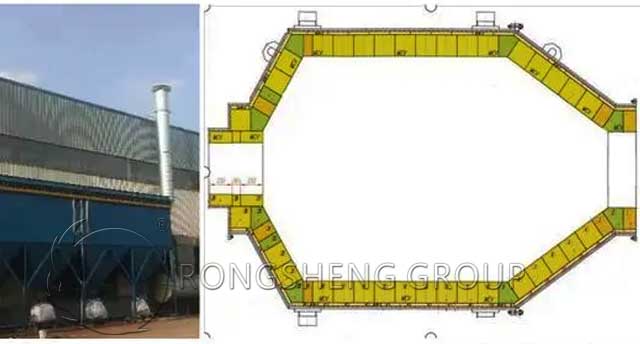
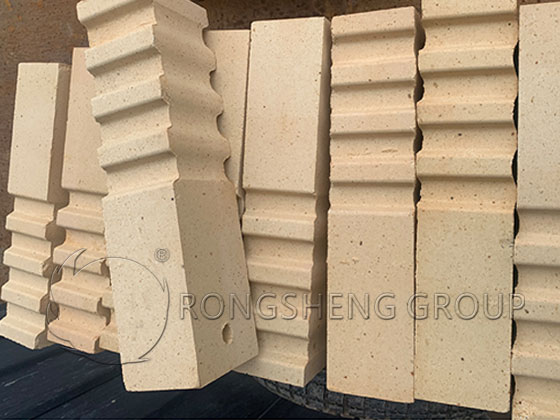
The tailings incinerator at a petrochemical refinery is a vertical incinerator with a normal operating temperature of 1200-1350℃. Its function is to oxidize and burn the toxic organic matter in the petrochemical tailings, converting it into harmless gases before venting it into the atmosphere.
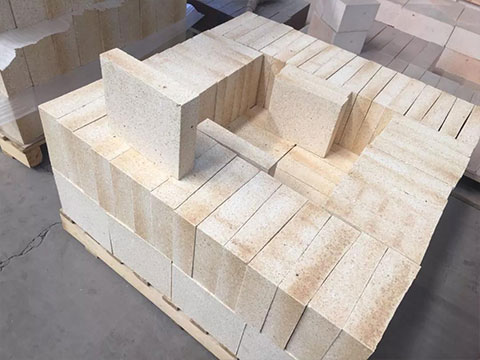
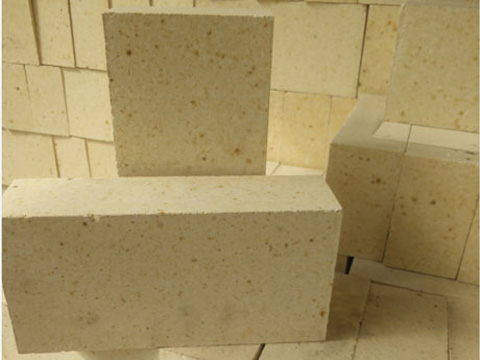
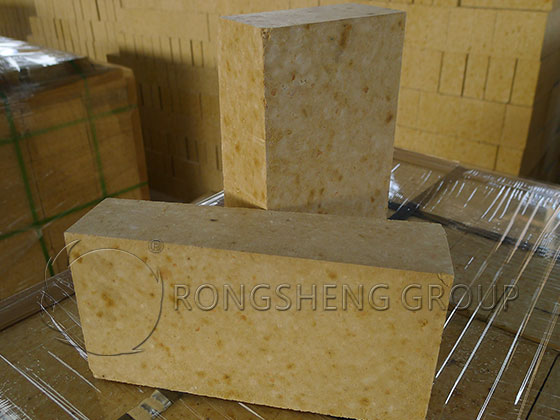
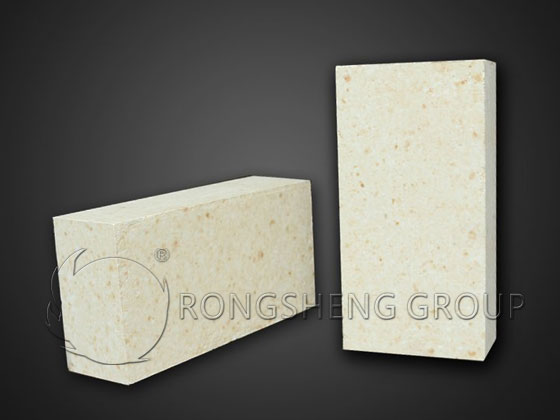
Mullite-Andalusite Brick Lining for Petrochemical Tailings Incinerator
Under normal atomization conditions, the tailings nozzle experiences relatively little thermal shock to the lining material. However, the nozzle often fails to atomize properly, resulting in un-atomized tailings being sprayed directly onto the lining, subjecting it to direct scouring. Simultaneously, a rapid drop in local temperature creates a temperature difference with the surrounding lining, generating internal stress. When this internal stress exceeds the lining’s strength, cracks appear, gradually widening until fracture occurs. The continuous lining detachment under the tailings’ scouring is the primary cause of this lining damage.
The furnace originally used a grade III high-alumina brick lining, which, under such harsh operating conditions, typically had a lifespan of less than one year, impacting the company’s economic efficiency. The plant urgently needed to improve the lining material to extend its lifespan.
Based on this situation, MH-55 high thermal shock stability mullite-andalusite bricks were successfully developed using M-60 mullite sand and high-purity andalusite as the main raw materials. The main specifications of the raw materials are as follows: M60 mullite sand, Al2O3 ≥ 60%, Fe2O3 ≤ 1.0%, refractoriness ≥ 1800℃, bulk density ≥ 2.75 g/cm3, mullite phase ≥ 80%; andalusite, Al2O3 ≥ 55%, Fe2O3 ≤ 1.0%, refractoriness ≥ 1790℃.
The MH-55 brick layer is 230 mm thick, the same size as the original brick lining. MH-55 bricks have performed well in this petrochemical company, extending the incinerator’s maintenance interval from once a year to every two and a half years. During use, the lining exhibits good integrity and strong resistance to erosion and spalling.

Advantages of Andalusite Bricks in Hot Blast Pipes
Blast furnace ironmaking is the most widely used ironmaking process globally. The hot blast stove is the core equipment for storing and supplying hot blast for blast furnace smelting. The blast furnace and hot blast stove are connected by hot blast ducts. Hot blast ducts consist of hot blast branch pipes, main pipes, vertical pipes, surrounding pipes, bridge pipes, and air supply branch pipes.
The function of the hot blast ducts is to transport hot blast (1200℃-1300℃) from the hot blast stove to the blast furnace air supply system. Andalusite bricks, which have excellent high-temperature performance, are widely used for lining the hot blast ducts. Andalusite bricks have low creep, good thermal shock resistance, strong wear and erosion resistance, good chemical stability, and are well-suited to the operating conditions of hot blast ducts.
Mullimitation Behavior of Andalusite Bricks
Andalusite is a high-quality natural refractory material that can be used directly without firing, which is of great significance for energy conservation and emission reduction. Andalusite undergoes a decomposition reaction at high temperatures:
This reaction is called the primary mullitization of andalusite. The complete decomposition temperature of andalusite particles is 1450-1600℃, while that of fine andalusite powder is 1200-1300℃. The decomposition products of andalusite are mullite (3Al₂O₃·2SiO₂) and a silica-rich glassy phase (SiO₂), accompanied by volume expansion. The amount of silica-rich glassy phase is related to temperature and impurity content; at low impurity contents, the silica-rich glassy phase content is approximately 20%.
The silica-rich glassy phase produced by the decomposition of andalusite will adversely affect the high-temperature performance of the material, reducing its creep resistance. Mullite can be generated by adding alumina to the andalusite material, reacting with the silica-rich glassy phase; this reaction is called the secondary mullitization reaction:
3Al₂O₃ + 2SiO₂ → 3Al₂O₃·2SiO₂ + ΔV₂
The secondary mullitization reaction of andalusite produces a volume expansion of approximately 7-8%.
The manufacturing process for andalusite bricks in hot blast stoves utilizes the two mullitization reactions of andalusite to achieve high-temperature performance.
Rongsheng Refractory Materials Manufacture offers a complete range of andalusite bricks for hot blast stoves, offering superior performance and leading specifications to fully meet the requirements of various parts of the hot blast stove. Contact Rongsheng for free samples and quotations.