Although both alumina filler balls and alumina refractory balls use alumina (Al₂O₃) as their main raw material and are spherical in shape, they differ significantly in raw material ratios, core properties, microstructure, and industrial applications. The specific differences are as follows:
Different Raw Materials and Ratios
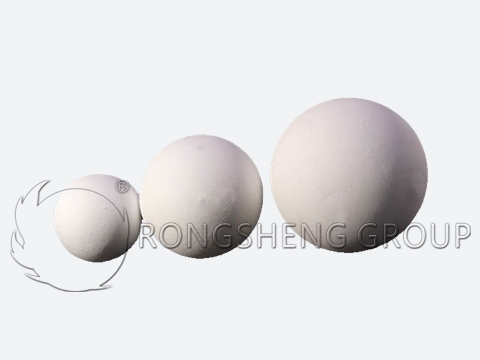
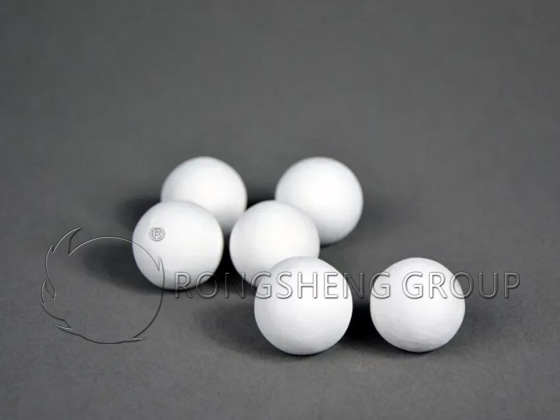
Alumina Filler Balls: Primarily composed of high-purity alumina (usually above 99%) or ultrafine alumina powder, with some products adding a small amount of binder. They are formed by high-temperature sintering, resulting in a smooth surface and a whitish color.
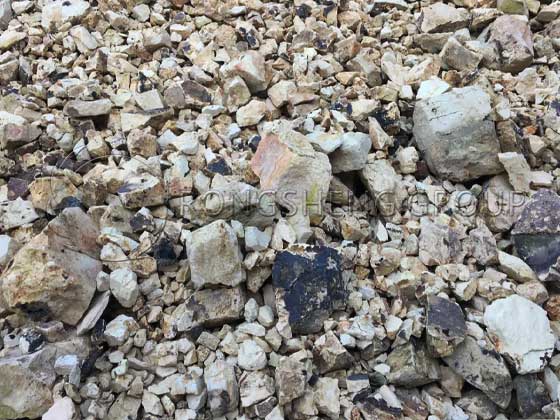
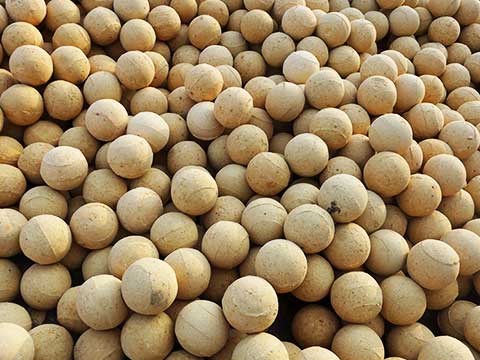
Alumina Refractory Balls: A mixture of industrial alumina (≥75%) and refractory kaolin (containing silicon and aluminum components) in a specific ratio. They are formed under high pressure and calcined at high temperatures (1600℃-1800℃), resulting in a relatively rough surface and a yellowish color.
Different Focuses on Core Properties
Alumina Filler Balls: Emphasize chemical stability, low wear, and high specific surface area. Their chemical properties are extremely stable, resistant to strong acids and alkalis, with good thermal shock resistance and a smooth surface, resulting in low resistance to the medium. It primarily serves as physical support and provides chemical inert protection.
Alumina refractory balls: Focus on high temperature resistance, high mechanical strength, and thermal shock resistance. They possess excellent high-temperature resistance (up to 1900℃), high mechanical strength, large heat capacity, and excellent resistance to thermal shock and chemical corrosion (especially alkalis).
Different Microstructures and Functions
Alumina packing balls: Mostly dense solid or microporous structures; some are hollow spheres (used as thermal insulation packing). They primarily rely on their high specific surface area and chemical inertness to support the catalyst, improve gas-liquid distribution, and prevent catalyst loss.
Alumina refractory balls: Dense solid structure. They primarily rely on their high hardness and high-temperature resistance to support the catalyst bed, disperse the gas-liquid medium, provide thermal insulation, and facilitate heat storage and exchange.
Different Main Application Areas
Alumina Packing Balls: Primarily used in tower packing, catalyst carriers, and reactor bottoms in the chemical, petroleum, and environmental protection industries (e.g., hydrogenation units, catalytic reforming units, desulfurization tanks, packed towers, etc.). Suitable for high-temperature, high-pressure, and highly corrosive conditions, but primarily for “protecting catalysts and optimizing fluid distribution.”
Alumina Refractory Balls: Primarily used in high-temperature industrial furnaces and reaction equipment in the iron and steel metallurgy, fertilizer, and petrochemical industries (e.g., hot blast stoves, converters, shift reactors, RTO regenerative thermal refractory furnaces, etc.). Suitable for extremely high-temperature, high-pressure, and strong thermal shock conditions, but primarily for “high-temperature support, thermal insulation, and heat storage.”
In summary, alumina packing balls are more of a “chemically inert functional packing,” while alumina refractory balls prices are more of a “high-temperature resistant structural refractory material.”
Rongsheng Alumina Packing Balls
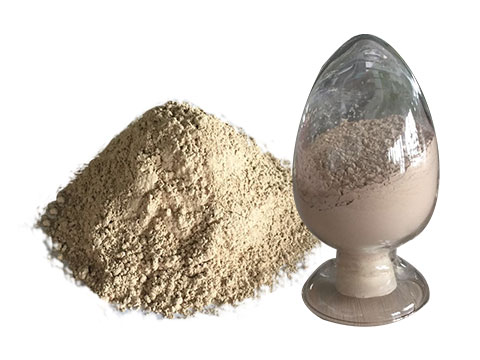
With the development of science and technology and the continuous expansion of application fields, alumina packing balls have become an important material, widely used in various fields. Alumina packing balls are inorganic ceramic materials with high specific surface area, good activity, and thermal stability. Their main component is alumina, usually existing in powder form. Alumina packing balls have good chemical inertness and high-temperature resistance, thus being widely used in various industrial fields.
Characteristics of Alumina Packing Balls
- High Specific Surface Area: Alumina packing balls have an extremely high specific surface area, generally above 300 m²/g, giving them a great adsorption capacity.
- Good Activity: Alumina packing balls have good activity and can react with various substances, thereby achieving catalysis, adsorption, and purification.
- High Temperature Resistance: Alumina packing balls can work stably for a long time under high temperature conditions, with a maximum temperature of up to 2000°C.
- High Mechanical Strength: Alumina packing balls have high hardness, high compressive strength, and are not easily worn.