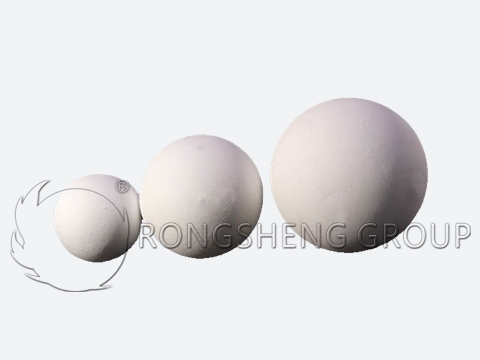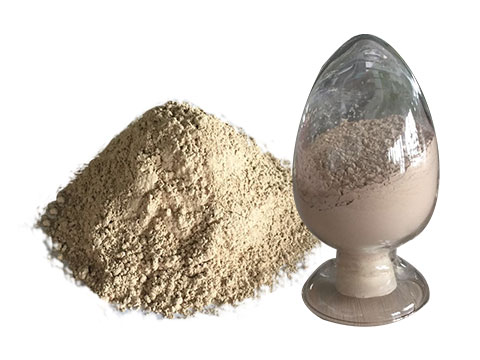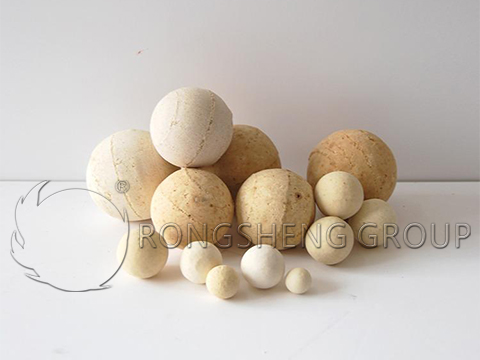
Refractory balls are manufactured using industrial alumina and refractory kaolin as primary raw materials, processed through scientific formulation, molding, and high-temperature calcination. The key characteristics of refractory balls include:
- High mechanical strength and a long service life.
- Excellent chemical stability; they do not react chemically with the materials they contact.
- Superior high-temperature resistance.
- Low thermal expansion rate; they are resistant to deformation and maintain a uniform, neat shape.
- High-temperature durability, high compressive strength, a high initial softening temperature under load, and excellent volume stability and creep resistance at elevated temperatures.
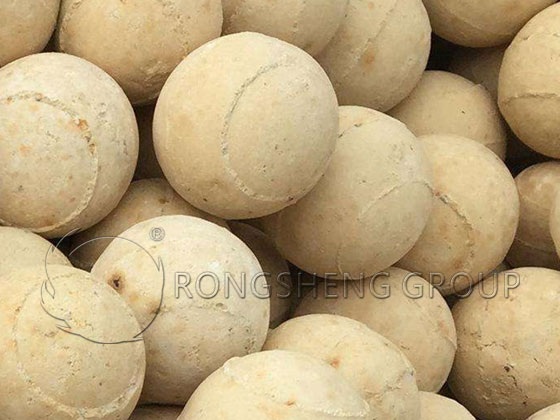
Classification and Applications of Refractory Balls
Standard Refractory Balls: Suitable for use in converters and shift furnaces within the sulfuric acid and fertilizer industries.
High-Alumina Refractory Balls: Suitable for equipment such as hot blast stoves and heating/shift furnaces in industries such as urea production and steelmaking. Additionally, high-alumina refractory balls (such as alumina ceramic balls) are frequently utilized as inert packing materials in equipment such as methanol synthesis towers. Furthermore, specialized types—such as cordierite insulating refractory balls—feature characteristics such as low density and excellent thermal insulation properties.
Precautions for Using Refractory Balls
The primary issue currently encountered with refractory balls is that high-alumina refractory balls—due to their high hardness and inherent brittleness—are prone to cracking during dry grinding processes. This results in pitted and uneven ball surfaces, leading to excessively high wear rates. Currently, the only available solution involves polishing the balls prior to shipment to identify and screen out any balls exhibiting cracks or excessive surface wear.
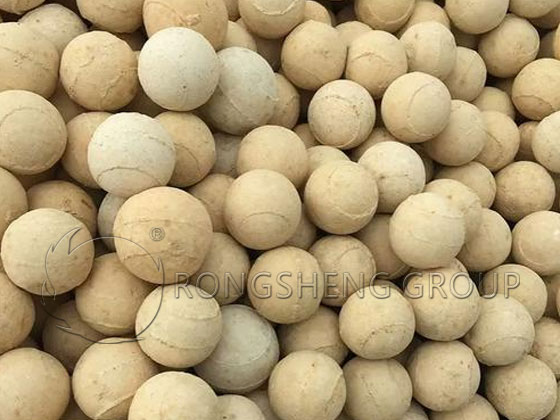
How to Distinguish Between Clay Refractory Balls and High-Alumina Refractory Balls?
Refractory balls are manufactured using industrial alumina and refractory kaolin as primary raw materials, processed through scientific formulation, molding, and high-temperature calcination; their maximum heat resistance temperature can reach 1900°C.
Refractory balls are categorized into clay refractory balls and high-alumina refractory balls. Clay refractory balls are suitable for use in converters and shift furnaces within the sulfuric acid and fertilizer industries. High-alumina refractory balls are suitable for equipment such as hot blast stoves and heating shift furnaces in industries including urea production and steel manufacturing. They are utilized in the high- and low-temperature shift furnaces, converters, hydro-converters, desulfurization vessels, and methanators found in fertilizer plants, where they serve to disperse gas and liquid flows, as well as to support, cover, and protect the catalysts.
The primary characteristic of clay balls is their low load-softening point; this is because a significant liquid phase forms within the clay balls at relatively low temperatures, thereby limiting their maximum service temperature. Regarding high-alumina balls, those varieties with a lower Al2O3 content exhibit characteristics similar to clay balls in this respect; however, as the Al2O3 content increases, the crystalline phase correspondingly increases while the glassy phase decreases, resulting in improved overall performance. Nevertheless, with the exception of varieties containing very high levels of alumina, the thermal shock resistance of high-alumina balls is, for the most part, comparable to that of clay balls.
Production Process Flow for Refractory Balls
Although refractory balls appear small, their production process is identical to that of refractory bricks. (RS High Alumina Ball Manufacturer). Whether during pre-production preparations or the actual manufacturing phase, not even the slightest oversight is permissible. The production process for refractory balls is outlined below:
- The Technical Department provides the Purchasing Department with the target specifications required for the refractory balls. They conduct on-site inspections of potential raw material sources and collect samples for test firing. Following the test firing, the samples undergo laboratory analysis to verify their physical and chemical properties; only after the results meet production requirements is the raw material approved for bulk procurement. Upon receipt, the purchased raw materials undergo rigorous sorting and are processed into specific grain sizes (0–3 mm) and fine powder (180 mesh). They are then passed through a 16,000-gauss high-intensity magnetic separator to remove iron impurities before being conveyed into storage hoppers.
- The Mold Workshop manufactures the necessary molds based on the technical drawings and shrinkage ratios provided by the Technical Department. The resulting semi-finished molds undergo dimensional verification; only after confirming their accuracy are they subjected to heat treatment.
- In the Forming Workshop, quality inspectors use standard sieves to conduct spot checks on the grain size and powder fineness of the raw materials, ensuring compliance with the production specifications issued by the Technical Department. Once approved, the raw materials are weighed and proportioned using an electronic batching system before being fed into a pan mixer for thorough blending. After 10–15 minutes of mixing, the batch is discharged and left to “age” (rest) for 2–4 hours before the actual forming process begins. During forming, the dimensions, individual unit weight, and bulk density of the semi-finished products are verified against the standards issued by the Technical Department; only after confirming their accuracy is mass production authorized. Throughout the production run, a dedicated quality inspector monitors the process to ensure that all semi-finished refractory balls maintain consistent individual weights. Each piece must meet dimensional tolerances, possess a smooth surface free of burrs, and be devoid of internal voids (pinholes) before it can proceed to the next stage: kiln loading.
- In the Firing Workshop, the semi-finished refractory balls undergo a final inspection—checking for dimensional accuracy, burrs, and pinholes—immediately prior to being loaded into the kiln. During kiln loading, the balls must be handled with care and arranged in a logical, orderly manner. The Workshop Supervisor exercises strict control over every kiln car loaded with semi-finished refractory balls, ensuring that absolutely no non-conforming products are allowed to enter the kiln. The Sintering Team makes adjustments based on the sintering temperature parameters provided by the company’s Technical Department, ensuring that the finished refractory balls meet the specific technical requirements for their intended applications.
- Upon discharge from the kiln, the finished refractory balls undergo a rigorous inspection process by the company’s Inspection and Sorting Workshop, where they are screened for dimensional accuracy and visual appearance. Only those products that fully satisfy the user’s requirements are selected as conforming goods. The refractory balls discharged from the kiln are grouped into 100-ton batches for internal self-inspection. Samples from each batch are submitted to the company’s laboratory for analysis, and a formal self-inspection report is issued to accompany the shipment. The Technical Department is responsible for cross-verifying the findings in the self-inspection report against the user’s specified physical and chemical parameters; once verified as accurate, the batch is cleared for shipment.
- The Shipping Department packages the inspected products in strict accordance with the user’s specific packaging and transportation requirements. Each package of refractory balls is clearly labeled with essential information, including the raw material composition, color code, consignee, manufacturer, and contact details; furthermore, the self-inspection analysis report is included with the shipment documentation. To ensure a seamless handover, a specialized representative accompanies the shipment to the construction site to facilitate the formal delivery and acceptance of the goods. Therefore, as a supplier, we must remain constantly attentive to our clients’ sales performance and market conditions, enabling us to make accurate forecasts and proactive adjustments.