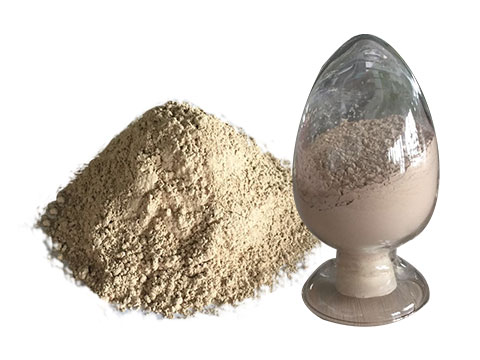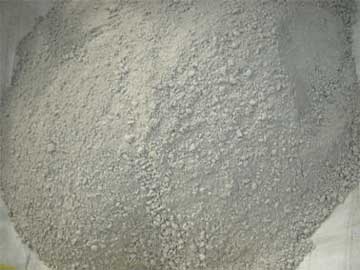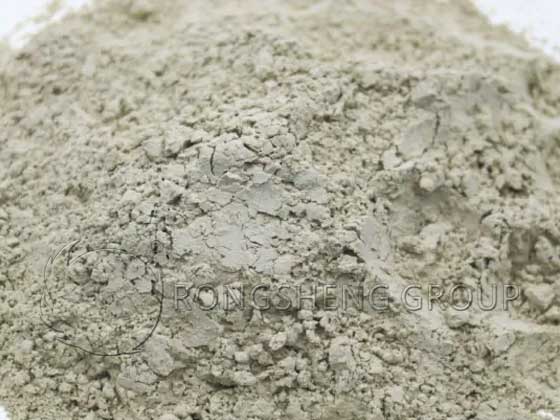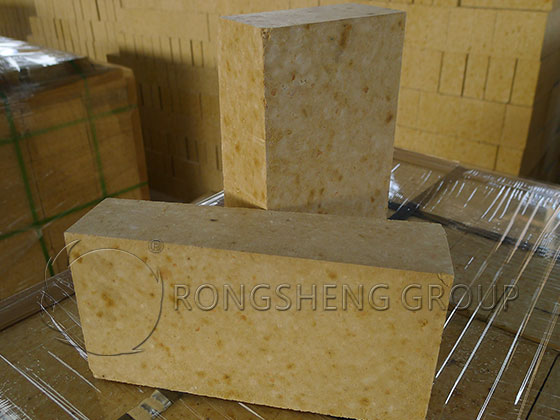
High-alumina cement, also known as aluminate cement or bauxite cement, is a hydraulic cementitious material with calcium aluminate as its main mineral component. Its main raw materials are bauxite and limestone, which are calcined at high temperatures, cooled, and then ground. High-alumina cement possesses excellent properties such as rapid hardening, high strength, high temperature resistance, and corrosion resistance. Its early strength gain rate far exceeds that of ordinary silicate cement, and its heat of hydration is concentrated in the early stages of release, making it particularly suitable for winter construction, emergency repair projects, and the preparation of refractory concrete. However, some unexpected problems may arise when using high-alumina cement. This article will answer these questions. If you have any further questions, please send them to our email address: sales@highaluminarefractory.com.
What is the Temperature Resistance of High-Alumina Cement?
High-alumina cement has a wide temperature range, with ordinary types typically around 1300℃. Special refractory types can reach 1400℃ to 1800℃, with the specific value depending on the cement grade and the aggregates used. There is a significant difference in temperature resistance between commonly used high-alumina cement and refractory-grade aluminate cement; it is essential to carefully check the specific parameters when purchasing.
What temperature can ordinary high-alumina cement withstand? Ordinary high-alumina cement (such as CA50 type) generally has a refractoriness between 1300℃ and 1400℃ and is mainly used for preparing heat-resistant concrete, exhibiting stability in environments between 900℃ and 1300℃. For use in ordinary building structures, its heat resistance is superior to that of silicate cement.
How strong is refractory-grade high-alumina cement? Specialized refractory aluminate cement boasts superior temperature resistance. High-grade products such as CA80 can maintain structural integrity in environments exceeding 1600℃, with some high-alumina types reaching 1400℃ to 1800℃. The overall refractoriness of the refractory cement is no less than 1580℃.
How to choose without making a mistake? When purchasing, pay attention to the grade and alumina content. Low-alumina cement has a temperature resistance of approximately 1000℃ to 1400℃, while high-alumina cement (70%~80% alumina content) has even higher temperature resistance. For industrial kilns, refractory-grade products are recommended; ordinary high-alumina cement is sufficient for general building applications.
Is High-Alumina Cement Resistant to Acids and Alkalis?
High-alumina cement is resistant to acids (especially sulfates) but extremely intolerant to alkalis. It is strictly prohibited from use in alkaline environments.
Acid resistance: It has good resistance to weak acids and sulfate corrosion. Due to the dense hydration products and the formation of low-calcium aluminates, it is suitable for sulfate-resistant projects. However, strong acids or prolonged acid immersion will still cause performance degradation; it is not absolutely “resistant to all acids.”
Alkali resistance: It has poor alkali resistance. It will chemically react with alkaline solutions, damaging the cement stone structure. It is prohibited from use in environments where it comes into contact with alkaline solutions.
Core conclusion: It possesses specific acid (salt) resistance capabilities, but is completely intolerant to alkalis. A strict distinction must be made between acidic and alkaline environments for its use.
What is the Optimal Operating Temperature for High-Alumina Cement?
The optimal operating temperature for high-alumina cement (hardening/curing) is around 15℃, and it is strictly forbidden to exceed 25℃.
The core reason: Temperatures above 25℃ accelerate the transformation of hydration products from the metastable state (CAH₁₀) to the unstable crystal form (C₃AH₆), leading to a significant reduction in strength and even structural damage in the later stages.
Temperature limits: The optimal range is 10℃-20℃ (peak 15℃); exceeding 30℃ is a serious violation of construction regulations and must be strictly avoided.
Special note: This cement has extremely high heat of hydration; large-volume or high-temperature construction can easily cause quality problems. It is generally only suitable for low-temperature emergency repairs or heat-resistant projects, and steam curing is strictly prohibited.
What Precautions Should be Taken When Using High-Alumina Cement?
Core prohibitions for using high-alumina cement: It is strictly forbidden to mix it with silicate cement or lime; the construction and curing temperature must not exceed 25℃ (maximum 30℃); steam curing is prohibited; the design must be based on the minimum stable strength, and it is not suitable for long-term load-bearing structures.
Key precautions:
Material mixing is strictly prohibited: Absolutely forbidden to mix with silicate cement or lime (calcium hydroxide); otherwise, a violent reaction will occur, forming expansive ettringite or causing flash setting, leading to structural cracking or even failure.
Strict temperature control requirements: The ambient temperature during construction should be controlled at around 15℃, and must not exceed 25℃. Temperatures exceeding 30℃ will accelerate crystal transformation (forming low-strength C3AH6), leading to a sharp decline in strength later; high-temperature steam curing is strictly prohibited.
Design Strength Basis: Due to the risk of strength degradation in later stages, structural design must be based on its lowest stable strength (usually the lower of the 7-day or 14-day strength determined by testing), and must not be designed based on the highest early strength.
Application Scope Restrictions: Only suitable for emergency repairs, winter construction, sulfate resistance, and heat-resistant projects. It must not be used in structural engineering projects subject to long-term loads or large-volume concrete projects (due to concentrated hydration heat, which easily leads to cracking).
Mix Proportion Control: The water-cement ratio must be strictly controlled (generally recommended to be ≤0.40), and sufficient cement content must be ensured to maintain density and the lowest stable strength.
Principle Overview: The main mineral in high-alumina cement is monocalcium aluminate (CA), whose hydration products change significantly with temperature. At low temperatures, metastable high-strength hydrated calcium aluminate (CAH10, C2AH8) is formed. At high temperatures (>30℃) or long-term storage, it transforms into stable low-strength cubic crystals (C3AH6), resulting in increased porosity and a significant decrease in strength. If lime or silicate cement is mixed in, the provided Ca(OH)2 will directly promote harmful transformations or generate expansion products.
Why Should High-Alumina Cement Not be Cured at Temperatures Above 30°C?
Curing high-alumina cement above 30°C will induce a crystal transformation of hydration products, generating a low-strength stable phase (C₃AH₆), leading to a significant reduction in later strength and even structural failure.
Core Mechanism
Low-Temperature Metastable Phase: At room temperature (<20°C), it mainly forms monocalcium aluminate hydrate (CAH₁₀) or dicalcium aluminate (C₂AH₈), with a dense crystal structure and high early strength.
High-Temperature Transformation Reaction: When the temperature exceeds 30°C, the above metastable phase rapidly transforms into tricalcium aluminate hydrate (C₃AH₆) and alumina gel. This process is accompanied by a significant increase in porosity (reduction of crystal water leading to volume shrinkage), making the cement stone structure loose.
Strength Consequences: C₃AH₆ itself has a strength far lower than the metastable phase, and the transformation is irreversible, causing a significant drop in the later-stage strength of concrete (potentially exceeding 50%), making it unable to meet long-term load-bearing requirements.
Key Limitations:
Temperature Threshold: The ambient temperature for construction and curing must not exceed 30℃, ideally controlled between 15℃ and 25℃.
Steam Curing Prohibited: High-temperature and high-humidity environments (such as steam curing) will accelerate crystal transformation; its use is absolutely prohibited.
Design Basis: Due to the risk of strength reduction, structural design must be based on the minimum stable strength; it must not be used in long-term load-bearing structures.