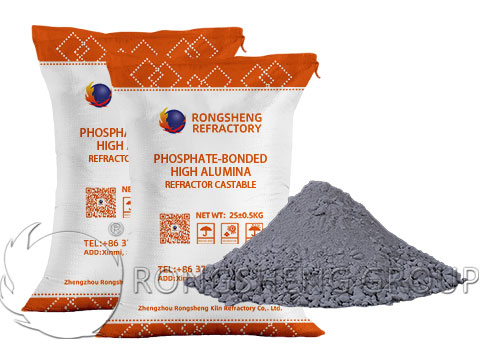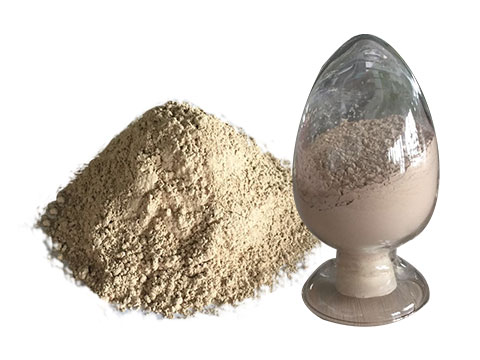
Refractory castables for heating furnaces are monolithic refractory materials that harden upon mixing with water without firing. They are widely used in critical components such as furnace linings, tops, and bottoms. Different materials can be selected based on the different temperature zones within the furnace to extend equipment life. Rongsheng Refractory Materials Manufacturer is a leading producer of advanced, environmentally friendly monolithic refractory castables, specializing in customized monolithic refractory castable products. Contact Rongsheng for free samples and quotations.
Which refractory material can withstand high temperatures?
Different parts of a heating furnace experience significant temperature variations, so selecting the right material is crucial for longevity. Aluminate cement-bonded castables have a refractoriness of 1400-1800℃, suitable for high-temperature linings. Corundum castables have a long-term service temperature exceeding 1700℃, excellent resistance to rapid heating and cooling, and are commonly used in boilers, blast furnace hot blast stoves, and heating furnace linings. Mullite castables have a long-term service temperature of approximately 1350℃, low thermal conductivity, and good insulation properties, allowing direct contact with flames as working linings. Low-cement series castables, with less than 8% cement content, have high density and maintain strength at medium and high temperatures, making them ideal for high-temperature zones. Steel fiber-reinforced castables, with the addition of heat-resistant steel fibers, exhibit 2-5 times greater impact and fracture resistance, making them particularly suitable for high-temperature sections with significant slide rail vibration.
Which part should use which refractory material?
Different parts of a heating furnace operate under significantly different conditions, requiring tailored solutions. The furnace walls and roof are greatly affected by high-temperature airflow and thermal stress. The front of the heating section and the roof of the soaking zone are easily damaged. Low-cement or mullite castables are commonly used. The furnace bottom is subjected to the impact of steel billets, wear from movement, and slag erosion. When high-alumina bricks or magnesia bricks are used as the working layer in the soaking bed, the service life is about six months. Using electrofused mullite bricks or corundum bricks can extend this to about one year. Alternatively, heat-resistant steel fiber-reinforced corundum castables can be used for integral casting, achieving a service life of over two years. The area around the burner and the openings at the side outlets are most susceptible to damage from high temperatures, rapid heating and cooling, and mechanical forces. Burner bricks made of corundum or mullite low-cement refractory castables can achieve a service life of 6 months to 3 years in oil-fired furnaces. Lightweight castables or refractory fiber materials with low bulk density and low thermal conductivity can be used for flue gas and insulation.
How to make refractory castable materials more durable during construction?
Construction quality directly affects the furnace lining life. Mixing must be carried out in a forced mixer. After dry mixing for 1 minute, add clean water and wet mix for 2-3 minutes. The mixed material should be used within 1 hour. During pouring, use an immersion vibrator to continuously pull the vibrator. After the surface of the material layer returns to its original state, slowly pull out the vibrator. Leave a 3 mm wide expansion joint every 2-3 meters. Kiln drying is a critical step and must be operated according to the kiln drying curve. The temperature should be slowly increased before reaching 600℃. Maintain the temperature at 150℃, 350℃, and 600℃ for one day each. Once the moisture in the lining is basically eliminated, slowly dry from 600℃ to the operating temperature. The entire kiln drying process takes approximately 7-8 days. The ambient temperature during construction must not be lower than 5℃. A batch of samples should be formed daily and placed near the kiln for curing in preparation for quality inspection. Using a whole-furnace casting technology with integral formwork, layered pouring, and high-temperature curing, a seamless fit between the furnace lining and the cooling wall can be achieved, reducing leakage and damage to the brick structure. Do you need Rongsheng’s assistance in analyzing the specific temperature distribution of your heating furnace and matching the most suitable castable refractory combination? Just send us your requirements to our email sales@highaluminarefractory.com.
What are the types of castable refractories used in heating furnaces?
Refractory castables for casting heating furnaces are a special type of refractory castable produced using micronized powder as a binder, fused pure calcium aluminate cement as a setting accelerator, and with the addition of anti-explosion agents and water-reducing agents. Their main characteristics include: fast setting speed, good thermal shock stability, high load softening temperature, and good slag resistance.
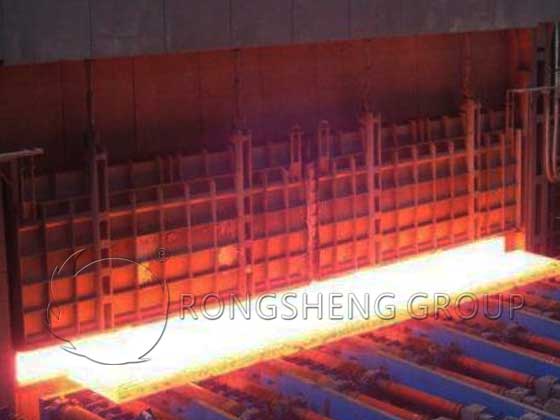
Reasons for Selection
Refractory castables are now widely used in large heating furnaces. Low-cement refractory castables are often chosen and are mixed with water before use. The construction of refractory castables is much faster than that of refractory bricks. First, anchors are installed on the inner wall of the furnace body. Anchor bricks are used for support and fixation on the top of the heating furnace. The anchor bricks are connected to the furnace steel structure via anchor hooks. The length of the metal anchor hooks should not exceed 1/3 of the furnace lining thickness, and their horizontal spacing should not exceed 600mm, and their vertical spacing should not exceed 500mm. Waterproofing treatment should be applied to the contact surface between the insulation layer and the castable to prevent moisture from damaging the insulation material during the casting process.
Then, templates should be fabricated according to the drawings. The template dimensions must be accurate, and the supports must be stable to prevent displacement during casting. The templates should be coated with machine oil before construction. The amount of water added during castable mixing should be strictly controlled. When using a vibrator for compaction, the compaction depth should not exceed 1.25 times the working length of the vibrator. The compaction time in one area should not be too long; approximately 2-3 seconds is sufficient to produce air bubbles in the castable layer. For heating furnaces, the castable lining thickness is generally 300mm. Low-cement and ultra-low-cement castables have higher service temperatures than refractory castables of the same quality. Clay-based and high-alumina low-cement castables can be used for the linings of various heat treatment furnaces such as heating furnaces and soaking furnaces. Mullite-based low-cement castables can be used for the linings of high-temperature burners and the wrapping of water-cooled pipes in heating furnaces. Corundum and chromium-containing corundum low-cement castables can be used as linings for certain parts of steel furnace refining equipment. They can also be used for linings of industrial frequency induction furnaces and high-temperature wear-resistant fabrics for petrochemical catalytic cracking reactors.