Principles of the Three-Furnace Process for Lead-Zinc Smelting and the Selection of Refractory Materials. The three-furnace process is the core technology for integrated lead-zinc smelting. It achieves continuous production by linking an oxidation furnace, a reduction furnace, and a fuming furnace in series. The process consists of three distinct stages:
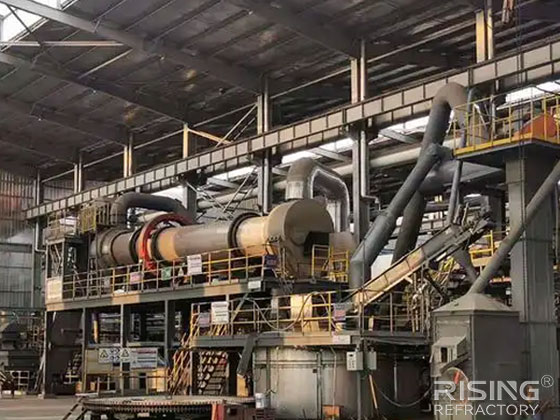
Oxidation Stage
- Equipment: Oxidation furnace (e.g., an oxygen bottom-blown or side-blown furnace).
- Reaction Conditions: High-temperature, oxygen-enriched environment (1000–1200°C). Sulfide concentrates (such as PbS and ZnS) react with oxygen to form metal oxides (e.g., PbO) and SO₂.
- Reaction Equation: 2PbS + 3O₂ → 2PbO + 2SO₂ (oxidation rate ≥ 90%).
- Characteristics: The flue gas temperature is high (900–1200°C) and must be cooled to 300–400°C via a waste-heat boiler before further processing.
Reduction Stage
- Equipment: Reduction furnace (typically an oxygen side-blown furnace).
- Reaction Conditions: Coke acts as the reducing agent at a temperature of approximately 800°C, reducing lead oxide (PbO) into crude lead.
- Reaction Equation: PbO + C → Pb + CO₂ (reduction rate ≥ 95%).
- Characteristics: Flue gas temperatures fluctuate significantly (high during charging, lower during discharging); an accumulator is required to stabilize steam supply.
Fuming Stage
- Equipment: Fuming furnace.
- Function: Recovers lead, zinc, and rare metals from the slag. Pulverized coal is injected to generate CO, which reduces zinc and lead oxides into metal vapors; these are subsequently recovered through condensation.
- Characteristics: Designed as an integrated unit with a waste-heat boiler to enhance the efficiency of waste-heat recovery.
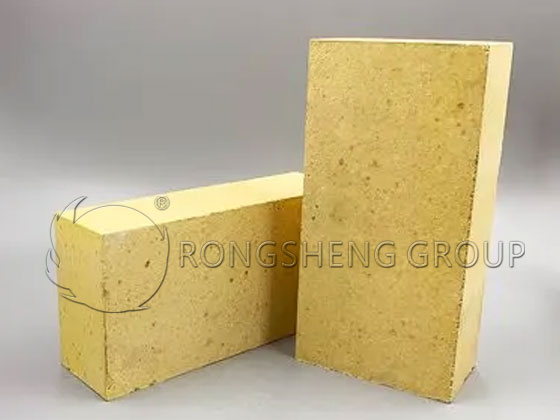
Selection of Refractory Materials for Furnace Linings
In the three-furnace smelting process, the performance requirements for refractory materials vary significantly across the different furnace units. Factors such as high-temperature resistance, thermal shock resistance, and resistance to slag erosion must be comprehensively considered.
-
Oxidation Furnace
-
- Core Requirements: High-temperature resistance (1000–1200°C) and resistance to erosion by sulfide-based slag.
- Recommended Materials: Fused-rebonded magnesia-chrome bricks, which offer excellent thermal shock stability and strong slag resistance.
- Critical Areas: Highly corrosion-resistant magnesia-chrome bricks are used in the oxygen lance zone, while dense fused-rebonded magnesia-chrome bricks—or high-performance alumina-chrome spinel bricks—are employed at the lead tapping outlet.
-
Reduction Furnace
-
- Core Requirements: Resistance to temperature fluctuations (800–1000°C) and to the reducing atmosphere created by coke.
- Recommended Materials: Direct-bonded or semi-rebonded magnesia-chrome bricks, which provide resistance to erosion in a CO-rich atmosphere.
- Specialized Design: A ramming mass is used as an impermeable layer at the furnace bottom, with a working layer composed of semi-rebonded magnesia-chrome bricks.
-
Fuming Furnace
-
- Core Requirements: Resistance to erosion from high-velocity gas streams and to oxidative corrosion caused by zinc vapor.
- Recommended Materials: Alumina-chrome spinel bricks, which offer high-temperature resistance, erosion resistance, and protection against zinc vapor penetration.
General Optimization Strategy
Furnace Bottom Design: A base layer of high-alumina bricks (for high thermal conductivity), an intermediate impermeable layer of ramming mass, and a working layer of magnesia-chrome or alumina-chrome bricks.
Technical Advantages
The three-furnace process features low overall energy consumption (approximately 150 kg of standard coal per ton of lead), a sulfur recovery rate of ≥96%, and direct recovery rates of 93% for lead and 87% for zinc.
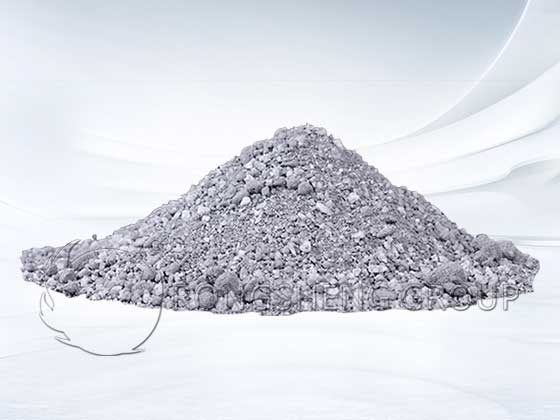
Selection of Refractory Materials for the Bottom of Lead Smelting Furnaces
Non-ferrous metals encompass a wide variety of types, which in turn necessitates a diverse range of smelting furnaces. In the context of lead metallurgy, for instance, there are dozens of different furnace types used to process various lead-bearing materials. Despite this diversity, the fundamental principles for selecting refractory linings remain consistent: the primary materials employed are typically magnesia-chrome bricks, high-alumina bricks, and high-alumina refractory ramming masses.
Permanent Lining Layer at the Furnace Bottom
In the design of furnace linings, the choice of refractory materials varies according to the specific location within the furnace structure. For a stationary horizontal smelting furnace, the furnace bottom is generally constructed using materials such as magnesia-chrome bricks, high-alumina bricks, aluminum-chrome spinel, high-alumina ramming masses, or magnesia-based ramming masses. Some designs also incorporate high-strength, anti-seepage ramming masses—typically based on the Al2O3-SiO2 system with an Al2O3 content exceeding 75%. Given that molten lead has a high specific gravity (10.6 g/cm³) and exceptional penetrative capacity, the refractories used at the furnace bottom must not only facilitate heat dissipation but also provide robust resistance against lead penetration.
A widely adopted practice involves first laying high-alumina bricks atop the steel bottom plate of the furnace. High-alumina bricks offer high compressive strength (40–60 MPa at room temperature) and superior thermal conductivity—calculated as (2.09 + 1.861 × 10⁻³t)—compared to magnesia-chrome bricks (1.28 + 0.407 × 10⁻³t), making them well-suited as a base layer. Above this base layer, a layer of refractory material resistant to lead penetration—such as a magnesia-based or high-strength, anti-seepage (high-alumina) ramming mass—is applied to serve as an impermeable barrier. In the case of magnesia-based ramming masses, the mixture typically consists of magnesia grains and magnesia powder in a 7:3 ratio, bonded with brine. The grain size distribution for the magnesia component is generally 70% for the 0.2–0.5 mm fraction and 30% for the 1.5–3.0 mm fraction. High-strength, impermeable ramming mass is composed of high-alumina aggregates and powders of various particle sizes. Upon high-temperature firing, these aggregates—ranging in size—expand and bond tightly together, effectively achieving the desired resistance to lead penetration.
It is crucial to note that after ramming magnesia-based or magnesia-chrome-based masses, the material must undergo low-temperature firing to remove free moisture. Subsequently, the expansion joints should be packed solid with fine magnesia powder to ensure the strength and density of the rammed layer. A thickness of 150–300 mm is recommended for the ramming mass; this facilitates complete, single-pass ramming and allows for uniform firing, resulting in a cohesive, highly impermeable monolithic layer.
Hearth Working Layer Zone
Magnesia-chrome bricks are widely used for the safety and working layers of furnace hearths. Typically, direct-bonded magnesia-chrome bricks are employed for the safety layer, while semi-rebonded magnesia-chrome bricks are used for the working layer. Given that the temperature of the hearth fluctuates significantly due to variations in the molten lead level, semi-rebonded magnesia-chrome bricks—which offer superior thermal shock resistance—are the preferred choice. In some furnace designs, high-alumina bricks are used for both the safety and working layers; such furnaces generally feature a bottom lead layer approximately 400 mm thick. Since this configuration protects the hearth from slag erosion, high-alumina bricks with an Al₂O₃ content of at least 75% can be utilized for both the safety and working layers.
The above represents a well-established approach to selecting refractory materials for lead smelting furnace hearths. In practice, however, the specific configuration should be determined through precise analysis based on the furnace type and the composition of the ore being smelted.