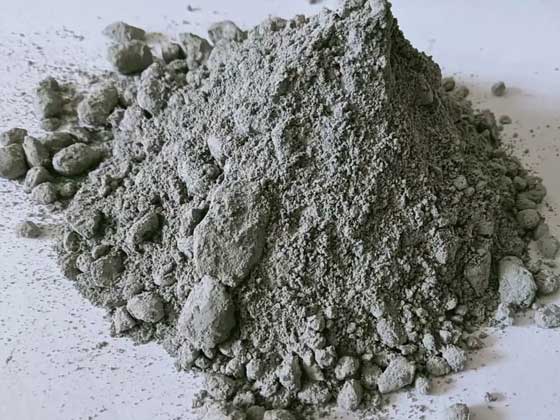
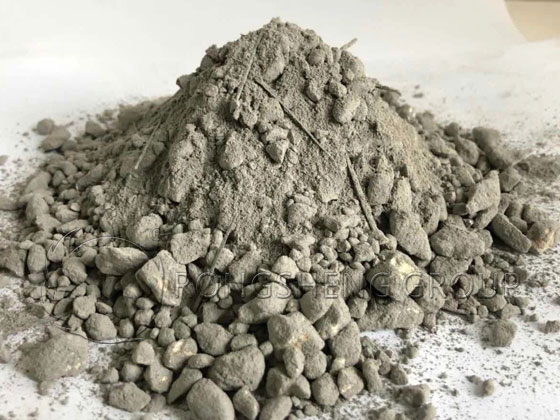
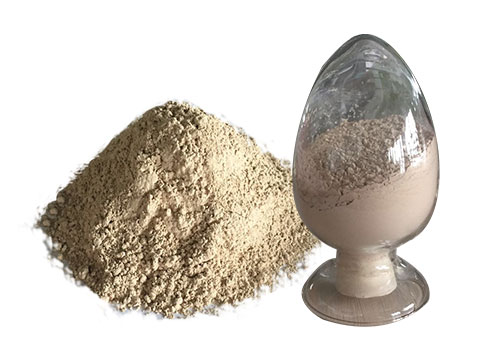
Calcium aluminate cement (CAC) serves as a vital binder in refractory castables, as it imparts sufficient demolding strength to the material after 8–24 hours of curing at various temperatures. Through hydration reactions, CAC forms diverse hydration products that provide the necessary strength for demolding and rapid drying; this ultimately ensures that CAC-bonded castables achieve excellent mechanical strength and superior high-temperature performance after sintering. It is also important to note that CAC is a key component whose hydration behavior can be modulated to influence both the workability and the overall performance of the castable.
External factors significantly affect the hydration behavior of the cement. Numerous variables—such as curing temperature, humidity, particle size, and the presence of admixtures—play a role in the hydration process of calcium aluminate cement. This includes the impact of admixtures on the mechanical strength of CAC-bonded castables, as well as the modification of such castables.
Modification of Calcium Aluminate Cement-Bonded Castables
Zn(OH)₂ is added to calcium aluminate cement (CAC)-bonded corundum castables to enhance their mechanical strength. The results indicate that as the Zn(OH)₂ content increases, the intermediate-temperature strength of the CAC-bonded castables improves significantly. This is because, at 140°C, Zn(OH)₂ decomposes into ZnO, as shown in reaction (5). As the temperature rises further, the ZnO reacts with the aluminum oxide present in the binder to form ZnAl₂O₄ (ZA spinel), as shown in reaction (6). The formation of ZA spinel facilitates the development of sintering necks, thereby increasing the ceramic bonding strength of the castables.
Although the formation of ZA spinel hinders the development and growth of CA₆, the decomposition of Zn(OH)₂ and the subsequent generation of ZA spinel create micropores. These pores provide space to accommodate the volume expansion resulting from the in-situ formation of CA₂, CA₆, and ZA spinel, thereby reducing the porosity of the castable. Consequently, the incorporation of Zn(OH)₂ effectively enhances the volume stability of the castable.
Research on the modification of calcium aluminate cement (CAC) using carbon black has shown that in materials prepared via sintering, the carbon black is uniformly distributed among the calcium aluminate phases. This improves wettability and oxidation resistance, reduces the porosity of the castable, and enhances both its compressive and flexural strength. Furthermore, since carbon black is not easily wetted by steel slag, it inhibits the penetration of liquid slag, thereby improving the slag resistance of the castable. Studies indicate that carbon-containing calcium aluminate cement enhances the thermal and slag resistance of Al₂O₃-SiC-C castables. During the sintering process, the oxidation of silicon and carbon components within the castable matrix generates SiO and CO gases; these subsequently react with carbon and silicon powders to form silicon carbide (SiC) whiskers, as illustrated by reactions (7) and (8).
Due to their superior degree of graphitization and better dispersion, carbon nanotubes (CNTs) can serve as a carbon source to form a continuous network of silicon carbide (SiC) whiskers. Research indicates that under thermal shock, these whiskers can form “bridging ligaments” at the crack propagation front. Whether the crack propagates along the whisker interface or causes the whiskers to fracture, additional fracture energy is absorbed, thereby inhibiting further crack extension. Consequently, this continuous SiC whisker network promotes stable crack formation and effectively toughens the matrix, significantly enhancing the thermal shock resistance of the castable. Furthermore, this continuous network of SiC whiskers facilitates the formation of a continuous spinel layer at the slag line, thereby improving the corrosion resistance of the castable.
For castables bonded with calcium aluminate cement (CAC), the use of an appropriate dispersant can effectively reduce water demand while optimizing both the workability and mechanical properties of the refractory castable. This study examined the effects of three dispersants—naphthalene sulfonate-formaldehyde condensate (FDN), sodium tripolyphosphate (STPP), and propionic acid (PA)—on the morphology of cement hydration products and the mechanical properties of the refractory castables. Increasing the dispersant content leads to a rapid decrease in apparent viscosity, followed by stabilization; this indicates that all three dispersants are effective, with PA demonstrating the best performance. With the addition of PA, C3AH6 transforms into upright cubic grains with diameters exceeding 5 μm, while AH3 shifts from granular crystals to elongated columnar aggregates (approximately 0.5 μm in length)—a transition that becomes more pronounced as the PA concentration increases.
As the dispersant content rises, the electrostatic repulsion between particles within the castable increases, which enhances the flow value. This facilitates the release of internal gases, reduces the porosity of the castable, and significantly improves its mechanical strength—a superior strength performance likely attributed to the bridging effect of the elongated columnar AH3 structures. However, if the dispersant content exceeds the optimal level, the resulting increase in ion concentration causes the electrical double layer to collapse (condense), leading to a decrease in the flow value of the castable. As a dispersant, polyphosphate can effectively reduce the water demand of calcium aluminate cement (CAC). Under hydrothermal conditions, an acid-base reaction between the CAC and the polyphosphate promotes the formation of ceramic bonds. Research indicates that the addition of (NaPO₃)₆ enhances the degree of CAC hydration. At room temperature, (NaPO₃)₆ inhibits the conversion of CAH₁₀ and C₂AH₈ into C₃AH₆; however, upon heat treatment at 200°C, it accelerates the dehydration of CAH₁₀ and C₂AH₈ to form C₃AH₆, which helps mitigate the loss of cement strength. In the 200–1000°C temperature range, the presence of additional CA and CA₂ phases is observed. This is attributed to the formation of Ca₁₀(PO₄)₆(OH)₂—a product of the acid-base reaction—which exhibits gel-like properties and the ability to fill voids surrounding the hydration products, thereby densifying the CAC structure. Furthermore, the C-A-P-H and C-P phases, generated through the acid-base reaction between (NaPO₃)₆ and the calcium aluminate phases, facilitate strong bonding within the matrix and provide high mechanical strength, ensuring the stability of CAC-bonded castables in high-temperature environments.
In summary, the hydration of calcium aluminate cement leads to the formation of stable, high-density phases, which results in increased porosity and reduced strength. Modifying CAC-bonded castables primarily involves suppressing the hydration process that produces these high-density phases, thereby minimizing strength loss and ensuring long-term structural integrity. Additionally, because CAC hydration products undergo dehydration and decomposition during heating—which increases porosity and diminishes mechanical strength—reducing the porosity of the castables serves as another key strategy for modification. Simultaneously, accelerating the hydration reaction can shorten the induction period and increase the heat of hydration, which helps reduce the setting time of the cement, ultimately enhancing both the practicality and economic efficiency of CAC-bonded castables.
Pros and Cons of Calcium Aluminate Cement-Bonded Castables
Calcium aluminate cement (CAC)-bonded castables offer numerous advantages, including ease of application, short setting times, high demolding strength, excellent refractoriness, and strong wear resistance. However, they also present certain challenges in practical use, such as a high water requirement and low strength at intermediate temperatures. As research into calcium aluminate cement continues to deepen, it is possible to further improve the processing properties and mechanical strength of CAC-bonded castables, ultimately overcoming these issues.
Calcium Aluminate Cement as an Accelerator for High-Alumina Wear-Resistant Plastic Refractories
Circulating fluidized bed (CFB) boilers, as a primary “clean combustion” technology, are widely used in the construction and retrofitting of thermal power and heating plants. This has driven the continuous improvement and development of the refractory materials required for these boilers. It is well known that CFB boilers feature complex lining structures; the combustion chamber contains high concentrations of coal particles and flue gases circulating at high velocities. Consequently, the refractory materials used for the linings must not only offer good workability during installation but also possess high mechanical strength and excellent wear resistance. High-alumina wear-resistant plastic refractories are primarily used in areas of CFB boilers with complex geometries—where conventional cast-in-place methods (using formwork) are not feasible—but which can instead be lined using precast components, manual ramming, or troweling. Such areas include water-cooled walls, primary return-feed zones, and cyclone separators.
Setting Mechanism of High-Alumina Wear-Resistant Moldable Refractories
High-alumina wear-resistant moldable refractories are typically composed of aggregates, fine powders, binders, and accelerators, mixed in specific proportions to achieve a material with a certain degree of viscosity and plasticity. The selection of an accelerator and an understanding of its setting mechanism are critical to both the installation performance of the material and the service life of the CFB boiler lining. In this study, high-alumina wear-resistant moldable refractories were prepared using homogenized high-alumina bauxite, silica fume, and alumina micropowder, with a phosphate-based binder. The research focused on the setting mechanisms of four different types of calcium aluminate cement (CAC) accelerators, as well as their impact on the sintering characteristics and wear resistance of the material after firing.
(1) Calcium ions within the calcium aluminate cement serve as the primary agents for accelerating the setting of these high-alumina moldable refractories. As the calcium oxide (CaO) content in the calcium aluminate cement increases, the initial setting time of the samples also increases; in some cases, the material did not fully harden until 5.5 hours had elapsed.
(2) The calcium aluminate cement accelerator directly influences the ambient-temperature mechanical properties of the moldable refractory material after drying at 110°C and heat treatment at 1100°C. As the calcium oxide content in the calcium aluminate cement used in the specimens decreases, both the bulk density and the ambient-temperature strength of the moldable material—following drying and heat treatment—gradually decline.
(3) After heat treatment, the phase composition of the high-alumina wear-resistant moldable material consists of corundum and mullite phases. An increase in the aluminum oxide content of the calcium aluminate cement accelerator enhances the crystalline characteristics of the corundum phase within the material.