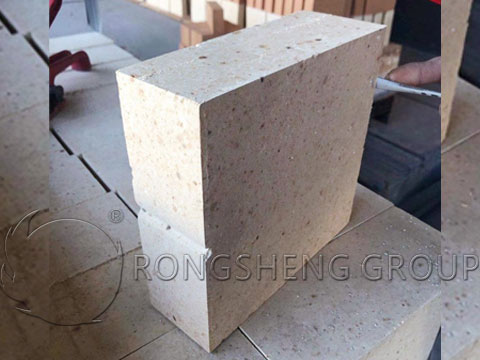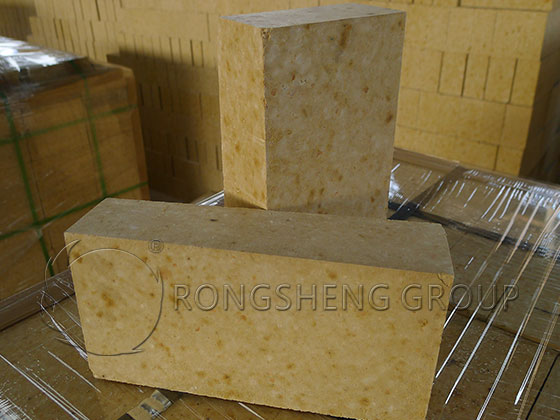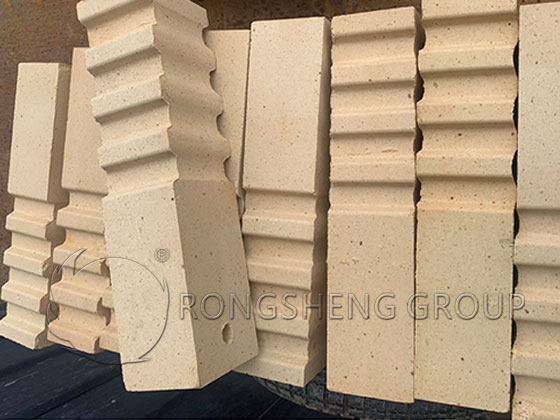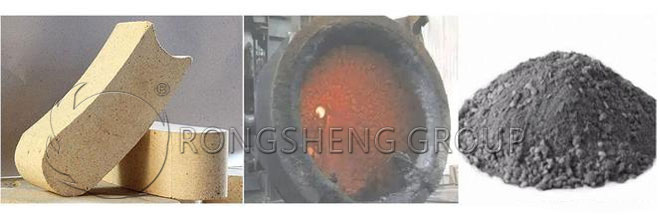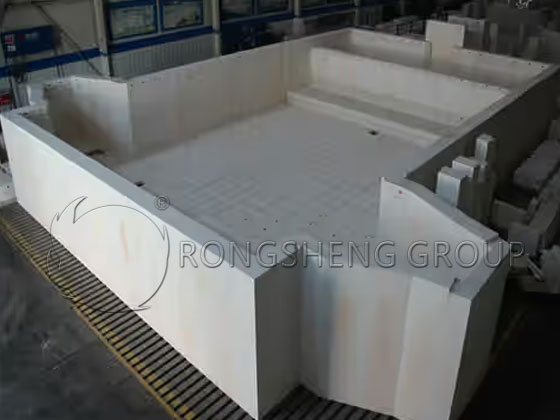
For what types of kiln linings are phosphate-bonded bricks best suited? Phosphate-bonded bricks are ideal for the linings of lime kilns and zinc-smelting kilns, where they can be used in both the high-temperature zone and the transition zone. In the case of rotary lime kilns, the entire kiln lining can be constructed using phosphate-bonded bricks—utilizing bricks with a higher bulk density for the high-temperature zone and bricks with a lower bulk density for the transition zone.
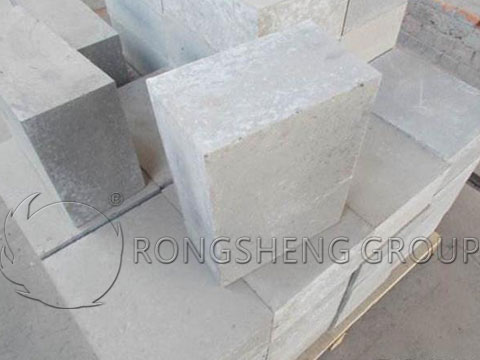
Phosphate-Bonded Bricks for Kiln Linings
Phosphate-bonded bricks are refractory bricks that utilize a phosphoric acid solution as a binder, falling under the category of chemically bonded refractories cured at low temperatures. They are manufactured using calcined bauxite (chamotte) and a phosphoric acid binder; the mixture undergoes a “mellowing” (aging) process before being pressed into shape under high pressure and subsequently sintered at a low temperature—typically between 550°C and 600°C.
These bricks exhibit excellent wear resistance and are available in various bulk densities, including specialized wear-resistant and composite variants. Through successive product iterations, the industry has evolved from traditional chemically bonded phosphate bricks to advanced composite chemically bonded types. Older, traditional versions often suffered from low refractoriness-under-load (softening temperature) and significant shrinkage during reheating. To address these limitations, some manufacturers incorporate silicon carbide into the raw material mix, which enhances wear resistance, increases the refractoriness-under-load, and improves resistance to chemical erosion. In some cases, these bricks are combined with lightweight insulating materials to create dual-purpose refractory units—offering both thermal insulation and wear resistance. This helps slow the cooling of the kiln lining and keeps the outer shell temperature low, thereby extending the service life of the kiln shell while simultaneously saving fuel and reducing production costs.
Through continuous optimization, the range of phosphate-bonded refractories has expanded to include high-refractoriness-under-load bricks, corundum-mullite bricks, and composite bricks consisting of phosphate-bonded material integrated with lightweight components. Silicon-corundum bricks are another example of specialized composite refractories developed for specific kiln environments—tailored to meet the unique lining requirements of industries such as lime production and zinc smelting.
While the application scope of phosphate-bonded bricks is not as broad as that of high-alumina bricks, they serve as an ideal lining material for lime kilns and zinc-smelting furnaces. In lime kilns, their chemical compatibility with the furnace atmosphere helps ensure high reactivity in the produced lime. In the zinc-smelting industry, they are valued for their superior wear resistance and strong resistance to slag erosion.
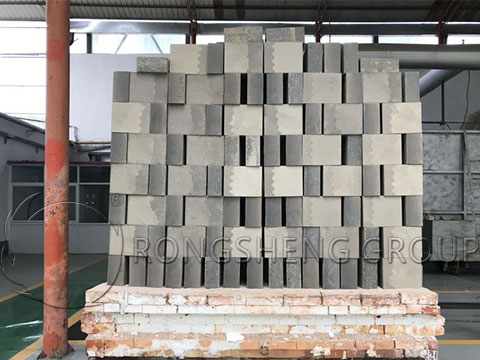
Advantages of Using Phosphate-Bonded Bricks in Small Rotary Kilns
Phosphate-bonded bricks are primarily used in small rotary kilns, such as those employed for lime calcination or the smelting of non-ferrous metals.
The production process for these bricks is characterized by a large critical particle size within the aggregate gradation, high-pressure forming using heavy-duty mechanical presses, and sintering via low-temperature heat treatment.
Because the raw materials contain a significant amount of α-Al₂O₃, the material reacts with phosphoric acid—within the 124–427°C temperature range—to form aluminum phosphates. By 510°C, the product consists largely of aluminum phosphate, which acts as a high-alumina matrix that binds the high-alumina aggregates together. In the silicates formed at high temperatures, aluminum tends to adopt a four-fold coordination, whereas in those formed at low temperatures or under high pressure, it tends toward a six-fold coordination. Consequently, the material maintains a stable structure until the aluminum phosphate decomposes. Below 1500°C, these bricks exhibit excellent chemical stability, high wear resistance, and superior high-temperature strength. Furthermore, the large critical particle size of the aggregate contributes to the bricks’ high thermal stability.
With an Al₂O₃ content ranging from 70% to over 88%, Al₂O₃ plays a dominant role in the material’s chemical and thermodynamic properties; eutectic mixtures do not form until temperatures reach 1400°C. The material exists as stable AlPO₄ until it begins to decompose back into Al₂O₃—a process that occurs gradually above 1500°C, leading to a reduction in the hot strength of the bricks.
Phosphate-bonded bricks are essentially neutral refractories. Their structural strength remains unaffected by whether the kiln atmosphere is oxidizing or reducing. Due to their relatively low load-softening temperature and rough surface texture, these bricks readily bond with kiln feed materials, facilitating the uniform formation of an initial, essential “kiln coating” (protective layer). Moreover, this coating adheres firmly and evenly to the bricks; should any defects arise in the coating, it can be easily repaired or reapplied. Phosphate-bonded bricks also exhibit excellent thermal shock stability; they do not crack, spall, or flake off when the temperature inside a rotary kiln lining fluctuates sharply. Consequently, the kiln coating remains intact, without collapsing or fracturing.
The advantage of using phosphate-bonded bricks for the lining of small-scale rotary kilns lies in their high hot strength at temperatures up to 1500°C, combined with superior wear resistance. When employed as a rotary kiln lining, they can extend the service life by one to two times compared to high-alumina bricks.
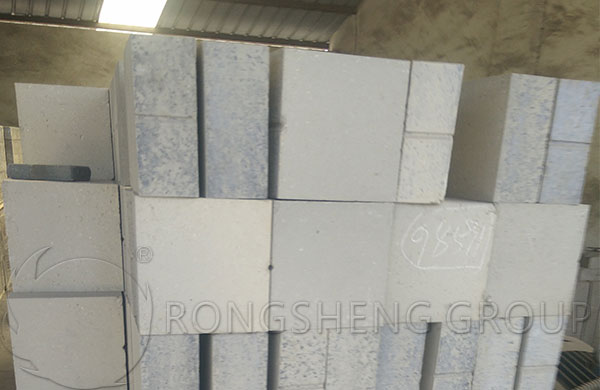
Feasibility of Using Standard Phosphate-Bonded Wear-Resistant Bricks in the Calcination Zone of Lime Rotary Kilns
Standard phosphate-bonded wear-resistant bricks typically have a bulk density of approximately 2.6 g/cm³. Given the severity of thermal erosion in the calcination zone, such standard bricks are unsuitable; instead, phosphate-bonded composite bricks with a bulk density exceeding 2.7 g/cm³ must be used. These composite bricks incorporate silicon carbide, which enhances both their wear resistance and resistance to erosion compared to standard phosphate-bonded bricks.
Temperature profiles vary across different zones of a lime rotary kiln, with the calcination zone reaching the highest temperatures. Consequently, it is essential to select appropriate grades of phosphate-bonded bricks for the kiln lining. For a lime rotary kiln with a daily capacity of 200 tons—which typically features a smaller diameter—standard phosphate-bonded bricks may be used in the transition zone, while phosphate-bonded bricks reinforced with silicon carbide are preferred for the calcination zone. Since the environment within a lime kiln is alkaline, phosphate-bonded bricks are an excellent choice, as their chemical nature is compatible with the alkaline conditions created by the lime. For larger-scale lime kilns with a daily capacity of 800 tons or more, magnesia-alumina spinel bricks are sometimes used for the lining. Alternatively, due to the relatively high cost of magnesia-based refractories, corundum-mullite-silicon carbide bricks are also employed. Currently, phosphate-bonded composite bricks are widely used in the market; these come in various configurations—some combined with silicon carbide, others with lightweight materials, and some even featuring a triple-composite structure incorporating both lightweight materials and silicon carbide. In all cases, these bricks are manufactured using a phosphate binder and then fired.
Phosphate-bonded composite bricks that incorporate lightweight materials offer the advantages of reduced kiln lining weight and superior thermal insulation, which helps save fuel. However, a drawback of this type of composite is the potential for delamination or fracture between the lightweight and dense (heavy) components. Conversely, bricks combined with silicon carbide result in a heavier lining and offer less effective thermal insulation (or lower airtightness) compared to those containing lightweight materials; however, they are significantly more resistant to fracturing. Ultimately, each type has its own distinct advantages, and the choice depends on specific operational requirements—there is no one-size-fits-all solution. In general, phosphate-bonded wear-resistant bricks—specifically phosphate-bonded composite bricks—are frequently used in the calcination zone of kilns due to their excellent wear and erosion resistance. However, standard phosphate-bonded wear-resistant bricks are unsuitable for use in the firing zone (sintering zone) of lime rotary kilns; they fail to facilitate the formation of a protective kiln coating (kiln lining/clinker coating), and their matrix composition cannot withstand the high-temperature operating conditions. Therefore, such standard phosphate-bonded bricks should not be used in the firing zone of lime rotary kilns.